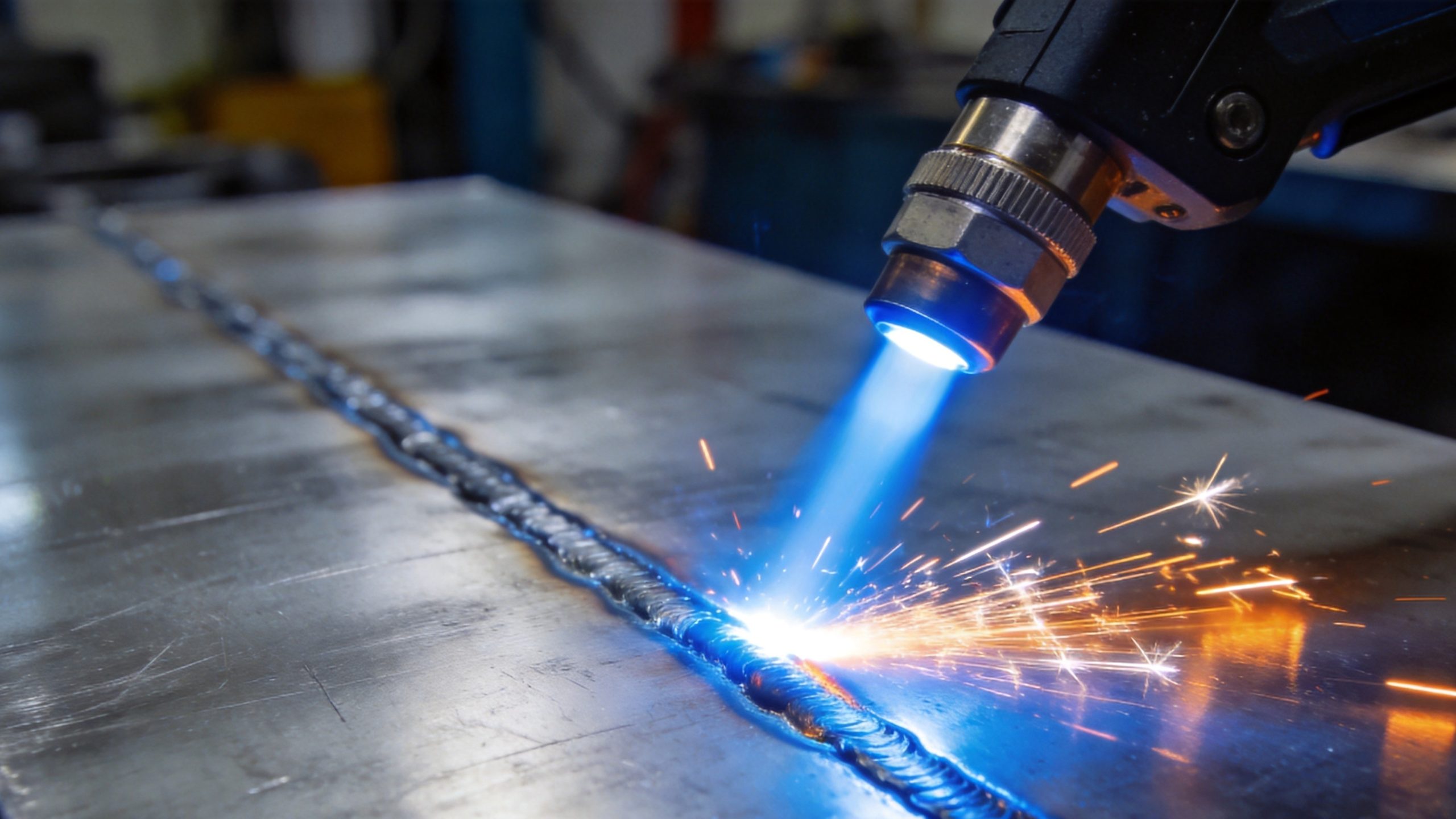
Aluminum is one of the most common — and most challenging — materials to weld. It’s lightweight, corrosion-resistant, and essential for industries from aerospace to automotive to electronics. But its high thermal conductivity, low melting point, and reflective surface make it notoriously difficult to weld with traditional methods.
So the question is: can you weld aluminum with a laser welder?
The short answer is yes — absolutely. And in many ways, laser welding is better for aluminum than TIG or MIG welding. But it’s not the same as welding steel, and there are some important things you need to know.
In this complete guide, we’ll cover everything about laser welding aluminum: how it works, what power you need, tips for getting good results, common challenges and how to overcome them, and how laser welding aluminum compares to traditional methods.
Can You Weld Aluminum with a Laser Welder?
Yes, you can absolutely weld aluminum with a fiber laser welder. In fact, laser welding is one of the best methods for welding aluminum — especially thin aluminum sheet.
Here’s why laser welding works well on aluminum:
That said, aluminum does present some unique challenges for laser welding. Let’s look at what makes it different from welding steel.
Why Aluminum Is Tricky to Weld (and How Lasers Help)
Aluminum has several properties that make welding challenging:
1. High Thermal Conductivity
Aluminum conducts heat about 5x faster than steel. This means heat dissipates away from the weld zone very quickly, making it harder to get the material to melt — especially at the start of a weld.
How laser welding helps: The extremely high power density of a focused laser beam can heat and melt aluminum faster than the heat can conduct away. It’s like turning on a blowtorch on a tiny spot — the heat arrives faster than it can leave.
2. High Reflectivity
Aluminum is highly reflective at the 1064nm wavelength of fiber lasers. A significant portion of the laser energy bounces off the surface rather than being absorbed.
How laser welding helps:
3. Low Melting Point
Aluminum melts at 660°C (1220°F), much lower than steel’s 1450–1500°C. This makes it easy to burn through or warp thin aluminum.
How laser welding helps: Because the laser is so fast and precise, it deposits just the right amount of heat. With proper parameters, you get a clean weld without burning through or excessive distortion.
4. Oxide Layer
Aluminum instantly forms a thin, tough oxide layer (Al₂O₃) when exposed to air. This oxide melts at a much higher temperature (2072°C / 3762°F) than the aluminum underneath.
How laser welding helps: The high-energy laser beam can penetrate through the oxide layer and melt the aluminum beneath. Proper surface cleaning (brushing or chemical cleaning) before welding also helps.
What Power Do You Need for Laser Welding Aluminum?
The power you need depends on the thickness of the aluminum and the type of weld you’re doing.
Recommended Power by Thickness
| Aluminum Thickness | Minimum Power | Recommended Power | Notes |
|---|---|---|---|
| 0.5 – 1mm | 1000W | 1500W | Easy to weld, no filler needed |
| 1 – 2mm | 1000W | 1500W | Most common sheet metal range |
| 2 – 3mm | 1500W | 2000W | May need wire feeder for gaps |
| 3 – 4mm | 2000W | 3000W | Wire feeder recommended |
| 4 – 6mm | 3000W | 3000W+ | Multiple passes or keyhole welding |
Pro tip from Transon Laser’s technical team: For most sheet metal fabrication shops working with 0.8–3mm aluminum, a 1500W or 2000W handheld laser welder is the sweet spot. A 1500W machine handles most aluminum sheet applications, while 2000W gives you more margin for thicker material and faster welding speeds.
Why Higher Power Helps with Aluminum
Tips for Laser Welding Aluminum Successfully
Getting great results on aluminum requires the right technique and parameters. Here are our top tips:
1. Clean the Surface First
Aluminum’s oxide layer and any oil, grease, or dirt on the surface can cause problems:
2. Use the Right Gas (When Needed)
For most aluminum welding applications, you’ll want to use shielding gas:
Many handheld laser welders have a gas port on the welding gun for this purpose.
3. Use a Wire Feeder for Thicker Material or Gaps
For aluminum thicker than 2mm, or if you have gaps between parts:
4. Start with Higher Power and Faster Speed
Aluminum conducts heat away quickly, so you need to get the heat in fast:
5. Mind the Focus Position
6. Watch for Porosity
Aluminum welds can develop porosity (small holes in the weld) if:
How to prevent porosity:
7. Be Careful with Thin Aluminum
Thin aluminum (0.5–1mm) is easy to burn through:
8. Always Test on Scrap First
This is the golden rule for any new material or thickness. Every aluminum alloy and thickness behaves differently. Always test your parameters on a scrap piece of the same material before running production parts.
Common Aluminum Alloys and How They Weld
Not all aluminum alloys weld the same way. Here’s how the most common ones perform with laser welding:
6061 Aluminum
5052 Aluminum
3003 Aluminum
7075 Aluminum
2024 Aluminum
Cast Aluminum
General rule: The 5xxx and 3xxx series alloys are the easiest to weld. 6xxx series weld well but lose some strength. 2xxx and 7xxx series are more challenging and may not be suitable for all applications.
Laser Welding Aluminum vs. TIG vs. MIG
Let’s compare the three most common aluminum welding methods:
| Factor | Laser Welding | TIG Welding | MIG Welding |
|---|---|---|---|
| Speed (thin sheet) | Very fast (2–10 m/min) | Slow (0.2–1 m/min) | Medium (0.5–2 m/min) |
| Skill required | Low | Very high | Medium |
| Weld quality | Excellent | Excellent | Good |
| Distortion | Very low | Medium | High |
| Post-processing | Minimal | Moderate | High |
| Shielding gas | Recommended (argon) | Required (argon) | Required (argon/helium) |
| Filler wire | Optional (for thicker/gaps) | Usually required | Required |
| Material thickness | 0.2–6mm+ | 0.5mm–thick plate | 1mm–thick plate |
| Equipment cost | Medium ($3,500–$8,000) | Low–Medium ($1,000–$4,000) | Low–Medium ($800–$3,000) |
| Cost per weld | Lowest | Highest | Medium |
Laser vs. TIG for Aluminum
TIG produces beautiful aluminum welds but is extremely slow and requires a highly skilled welder (aluminum TIG is one of the hardest welding skills to master). Laser welding matches or exceeds TIG quality at 5–10x the speed, with an operator who can be trained in days. For production aluminum welding, laser is almost always more efficient.
Laser vs. MIG for Aluminum
MIG is faster than TIG but produces more spatter, more distortion, and lower-quality welds. MIG aluminum welding also has a steep learning curve and requires a spool gun or push-pull gun. Laser welding is cleaner, faster on thin material, and requires less skill. For thin to medium aluminum sheet, laser wins on both speed and quality.
Applications of Laser Welded Aluminum
Laser welding is used across many industries for aluminum fabrication:
1. Electronics Enclosures
Aluminum electronics enclosures, housings, and heat sinks — laser welding produces clean, precise welds that don’t affect the electrical or thermal properties of the aluminum.
2. Automotive Components
Aluminum body panels, brackets, heat exchangers, and structural components — automotive manufacturers are increasingly using laser welding for aluminum parts because of its speed and consistency.
3. Aerospace
Aircraft aluminum components where precision, strength, and low distortion are critical. Laser welding is used for both production and repair.
4. Kitchen Equipment and Food Processing
Stainless steel gets all the attention, but aluminum is also used in food equipment — especially for commercial kitchen items and food processing machinery.
5. Lighting Fixtures
Aluminum light fixtures, housings, and heat sinks — laser welding produces clean, invisible joints that are essential for decorative and functional lighting products.
6. Marine and Boating
Aluminum boat components, railings, and fittings — saltwater-resistant aluminum alloys weld well with lasers.
7. Bicycle and Sporting Goods
Aluminum bicycle frames, components, and sporting equipment — laser welding provides strong, lightweight welds.
8. Solar and Renewable Energy
Aluminum frames and mounting systems for solar panels — fast, consistent welding is essential for high-volume production.
Safety Considerations for Laser Welding Aluminum
Laser welding uses Class 4 laser radiation — always follow proper safety procedures. Aluminum adds a few specific considerations:
General Laser Safety
Aluminum-Specific Safety
Choosing a Laser Welder for Aluminum
If you’re specifically buying a laser welder for aluminum work, here’s what to look for:
1. Enough Power
Don’t skimp on power if aluminum is a big part of your work.
2. Wire Feeder Capability
A wire feeder is very useful for aluminum welding — it helps with gaps, thicker material, and certain alloys. Look for a machine with a reliable wire feeder included or available as an option.
3. Gas Port / Shielding Gas Capability
Most aluminum welding benefits from shielding gas. Make sure the machine has a gas port on the welding gun and supports gas flow control.
4. Adjustable Parameters
You’ll want good control over power, pulse frequency, speed, and other parameters to fine-tune for different aluminum alloys and thicknesses.
5. Reliable Brand with Good Support
Aluminum welding can be tricky — you want a manufacturer that can help you with parameters and troubleshooting.
Transon Laser’s TSW series handheld laser welders are excellent for aluminum welding, with:
Final Thoughts
So, can you weld aluminum with a laser welder? Absolutely — and in many cases, it’s the best method available.
Laser welding solves many of the traditional challenges of welding aluminum:
That said, aluminum does require some special attention — proper cleaning, the right power level, appropriate parameters, and often shielding gas and filler wire. But once you dial in the settings, the results are excellent.
If you work with aluminum sheet metal and you’re still using TIG or MIG welding, it’s worth taking a serious look at laser welding. The speed, quality, and cost advantages are hard to ignore — and for many shops, the ROI on a laser welder is measured in weeks, not years.
Further Reading: