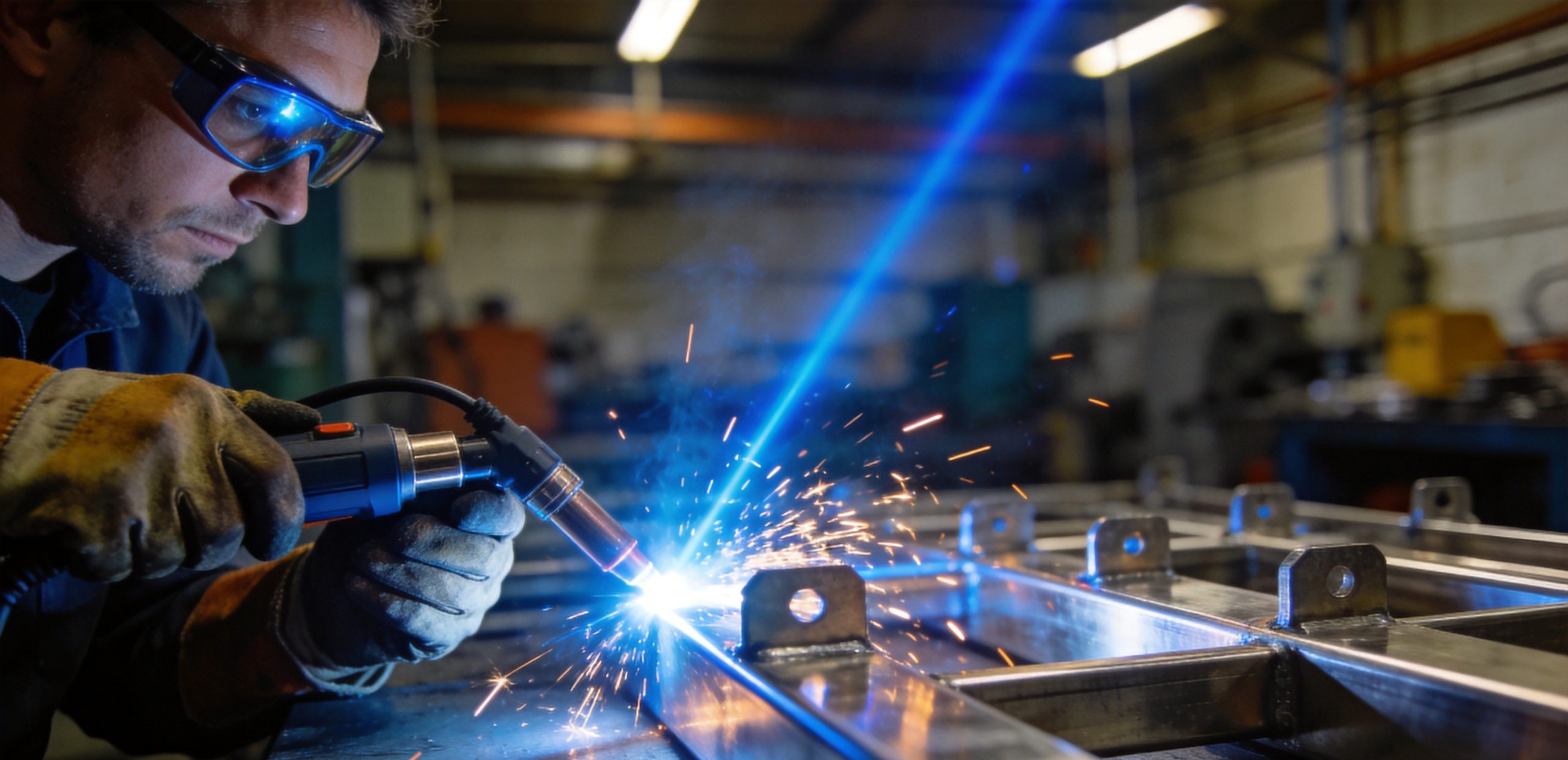
Buying a laser welding machine is a significant investment, and choosing the right configuration makes the difference between a machine that pays for itself quickly and one that sits underutilized or struggles with your actual production needs. The spec sheet is full of numbers—laser power, welding speed, wire feed speed, swing range—but it’s not always obvious which parameters matter most for your specific applications.
This guide breaks down every key parameter of a handheld and automated laser welding machine, explains what each one means in practical terms, and walks through how to match machine specifications to your actual production requirements. Whether you’re buying your first laser welder or upgrading to a higher-power system, understanding these parameters will help you make a confident decision.
Why Parameters Matter More Than Just Power
Two laser welders with the same advertised power can perform very differently on the shop floor. A 1500W machine from one manufacturer might weld 3mm stainless steel at 3m/min with excellent penetration, while another 1500W machine only manages 1.5m/min with porosity issues. The difference comes down to beam quality, wire feeder precision, swing (wobble) parameters, control software, and overall system engineering.
The key insight: advertised power is just the starting point. What actually determines your weld quality, speed, and consistency is how effectively the laser energy is delivered to the weld joint, how well the wire is fed, and how precisely the beam can be controlled.
In this guide, we cover every major parameter category and explain what to look for.
Laser Source Parameters
The laser source is the core of the welding machine, and its specifications directly affect weld quality, speed, reliability, and operating cost.
1. Laser Power (Rated Output Power)
Rated power is the number everyone looks at first—1000W, 1500W, 2000W, 3000W, and so on. It represents the maximum optical power the laser source can deliver through the welding head.
What it determines:
- Maximum material thickness you can weld in a single pass
- Welding speed at any given thickness
- Purchase price and operating cost
How to choose the right power level:
- 1000W–1500W: The most popular range for general sheet metal fabrication, ductwork, cabinets, and light structural welding. Welds up to 2–3mm stainless steel and 3–4mm mild steel in a single pass. Suitable for job shops, metal furniture manufacturers, and sheet metal shops doing mostly light-gauge work.
- 2000W: The sweet spot for most production welding applications. Welds up to 4–5mm stainless steel and 5–6mm mild steel in a single pass, and provides faster travel speeds on thinner materials. Handles the vast majority of common sheet metal and light structural welding jobs.
- 3000W: For heavier fabrication and thicker materials. Welds up to 6–8mm stainless and 8–10mm mild steel in a single pass. Used in structural steel, heavy equipment manufacturing, and thicker plate fabrication.
- 6000W+: High-power automated systems for thick-plate welding and specialized industrial applications. Typically used in automated production lines rather than handheld configurations.
Important caveat: Welding speed does not scale linearly with power. Doubling the power from 1500W to 3000W does not double your welding speed. On thin material, the speed difference may be modest because the joint fit-up and wire feed rate become the bottleneck. The real benefit of higher power is the ability to weld thicker material in fewer passes and maintain good penetration at higher speeds.
2. Laser Source Brand and Type
The brand and type of laser source significantly impact reliability, beam quality, and service life.
Major fiber laser source brands:
- IPG Photonics: The global industry standard. Known for reliability, consistent beam quality, and a worldwide service network. Generally the most expensive option.
- Raycus: The leading Chinese fiber laser source brand. Offers good performance at a lower price point than IPG, with improving reliability and service support. Very popular in mid-range machines.
- Max Photonics: Another major Chinese brand, competing closely with Raycus on price and performance.
- nLIGHT: US-based brand known for high beam quality and advanced features. Popular in higher-end and precision applications.
For most general-purpose laser welding, a Raycus or Max source from a reputable machine builder provides the best balance of performance and cost. For high-precision or critical applications, IPG or nLIGHT are worth the premium.
3. Beam Quality and Fiber Core Diameter
Beam quality and the fiber core diameter determine how tightly the laser beam can be focused and how the energy is distributed in the weld pool.
Fiber core diameter is the key parameter for welding:
- Smaller core (50–100μm): Produces a smaller, more concentrated spot with higher energy density. Better for deep penetration welding and thinner materials where you want precise heat input.
- Larger core (150–300μm): Produces a larger spot with more distributed energy. Better for wider welds, gap bridging, and materials where you want a broader heat-affected zone.
For handheld laser welding, the most common fiber core diameters are 100μm and 150μm, which provide a good balance of penetration depth and gap tolerance. Machines with smaller core diameters offer better penetration but are less forgiving of poor joint fit-up.
4. Pulse Capability and Modulation
While many handheld laser welders operate primarily in continuous wave (CW) mode, pulse capability is useful for certain applications. Pulsed welding can reduce heat input on thin materials, minimize distortion, and improve control on delicate assemblies.
Look for a machine that offers both CW and pulsed modes, with adjustable pulse frequency, pulse width, and peak power. This gives you more flexibility for different materials and thicknesses.
Welding Head and Wire Feeder Parameters
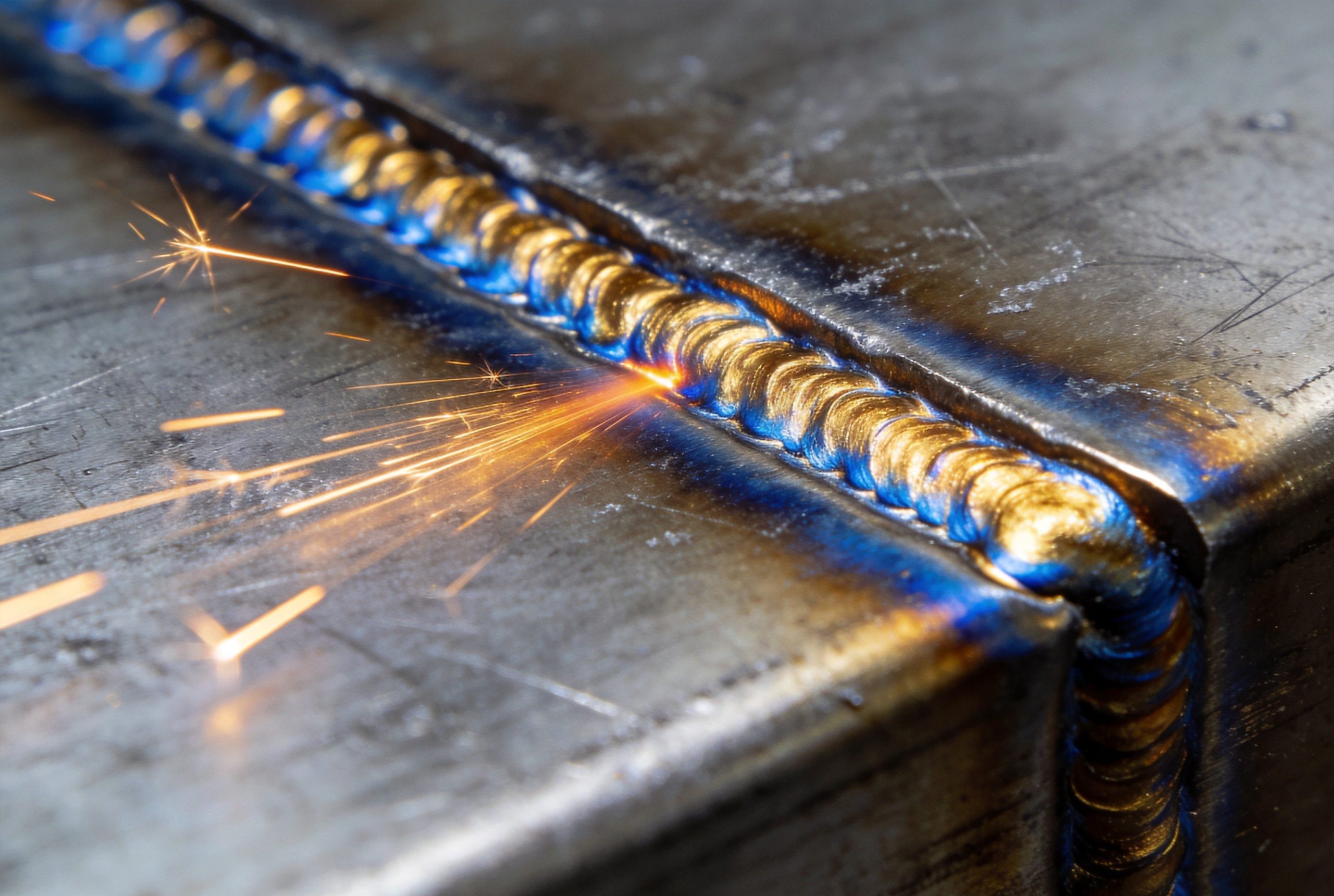
The welding head and wire feeder are where the rubber meets the road—these components have a huge impact on weld quality, ease of use, and consistency.
5. Wobble (Swing) Function and Parameters
Wobble (also called swing or weave) is one of the most important features of modern laser welders. The welding head oscillates the laser beam in a controlled pattern (typically circular or linear), which widens the weld pool, improves gap bridging, and creates a wider, stronger weld.
Key wobble parameters:
- Wobble amplitude: How wide the beam oscillates. Typical range is 0–5mm for handheld machines. Larger amplitude means a wider weld bead and better gap tolerance.
- Wobble frequency: How fast the beam oscillates. Typical range is 0–300Hz. Higher frequency produces a smoother weld bead but may reduce effective penetration.
- Wobble pattern: Circular is the most common and versatile. Some machines also offer linear (side-to-side) or figure-8 patterns for specific applications.
Why wobble matters: Without wobble, laser welding produces a very narrow weld bead that requires extremely tight joint fit-up (typically 0.1mm or less). With wobble, the weld bead can be 2–5mm wide, making the process much more forgiving of real-world fit-up variations. This is the feature that makes handheld laser welding practical for everyday fabrication work.
Look for a machine with adjustable wobble amplitude and frequency, and ideally multiple preset patterns. The ability to fine-tune wobble parameters for different jobs is a significant advantage.
6. Wire Feeder Capability
Most handheld laser welders use filler wire to add material to the weld pool, bridge gaps, and improve weld strength. The wire feeder’s precision and reliability are critical for consistent results.
Key wire feeder parameters:
- Wire diameter range: What sizes of filler wire the machine can handle. Common ranges are 0.8–1.6mm, which covers most general-purpose welding.
- Wire feed speed range: How fast the wire can be fed, typically measured in meters per minute (m/min) or inches per minute (ipm). Typical range is 0–15m/min. The right speed depends on material thickness, weld size, and travel speed.
- Wire feed accuracy: How consistently the wire is fed. Look for a precision wire feeder with digital speed control and good torque to prevent slipping and inconsistent feed.
- Wire material compatibility: What materials the feeder is designed for—stainless steel, mild steel, aluminum, etc. Aluminum wire is softer and can be more difficult to feed reliably, so make sure the feeder is up to the task if you plan to weld aluminum.
A good wire feeder should have smooth, consistent feed with minimal backlash. Poor wire feeding causes spatter, porosity, and inconsistent weld quality.
7. Welding Modes and Presets
Modern laser welders offer multiple operating modes and preset programs for different applications:
Common welding modes:
- Spot welding: Single pulse or short weld for tacking and spot joints
- Continuous welding: Standard continuous weld for seams and joints
- Pulse welding: Pulsed laser output for thin materials and heat-sensitive applications
- Cleaning mode: Some machines include a laser cleaning function for removing rust, paint, and oxides before welding
Preset programs allow operators to select a pre-configured setting for a specific material and thickness, rather than manually adjusting all parameters. This is especially helpful for less experienced operators and ensures consistent results across different jobs and shifts.
Look for a machine with a good selection of preset programs and the ability to save custom programs for your specific applications.
8. Nozzle and Focus Distance
The welding nozzle focuses the laser beam and delivers shielding gas to the weld pool. The standoff distance (distance from nozzle tip to workpiece) affects weld quality and consistency.
Key considerations:
- Auto-focus capability: Some advanced machines automatically adjust the focal position for different materials and thicknesses. For handheld machines, manual focus adjustment with clear markings is more common.
- Nozzle type and quick-change capability: Different nozzles are used for different applications. Quick-change nozzle systems reduce downtime between jobs.
- Shielding gas delivery: How effectively the nozzle delivers shielding gas to the weld pool. Good gas coverage is essential for preventing oxidation and porosity, especially when welding stainless steel and aluminum.
Motion System Parameters (for Automated Machines)
While handheld laser welders are operated manually, automated or CNC laser welding systems have motion system parameters that affect performance.
9. Motion System Type
Automated laser welding systems use different types of motion systems:
- Cartesian gantry systems: X-Y-Z linear motion, good for flat parts and 2D/3D welding within a defined work envelope.
- Robotic arms: 6-axis robots for complex 3D welding of curved or irregular parts. Offer maximum flexibility but require programming expertise.
- Rotary tables: For welding circular or rotational parts like pipes, cylinders, and rings.
The right motion system depends entirely on the types of parts you weld.
10. Positioning Speed and Accuracy
For automated systems, the motion system’s speed and accuracy determine cycle time and weld quality:
- Positioning speed: How fast the welding head moves between welds. Higher speed reduces non-productive time.
- Positioning accuracy: How precisely the head can be positioned. Typical accuracy for laser welding systems is ±0.05mm or better.
- Repeatability: How consistently the system returns to the same position. Critical for high-volume production of identical parts.
Control System and Software
11. Control Interface
The control system is how the operator interacts with the machine. For handheld welders, this is typically a pendant or touchscreen controller on the machine body, plus a trigger and control buttons on the welding gun itself.
Key considerations:
- Ease of use: The interface should be intuitive for your operators. Parameter adjustments should be quick and straightforward.
- Parameter storage: Can the machine save multiple parameter sets for different jobs? This is a big time-saver if you switch between materials and thicknesses frequently.
- Language support: Make sure the interface is available in a language your operators understand.
- Safety features: Look for features like key lock, password protection, and safety interlocks.
12. Process Monitoring and Quality Control
Higher-end laser welding systems include process monitoring capabilities:
- Power monitoring: Real-time laser power output verification
- Weld monitoring: Cameras or sensors that monitor the weld pool
- Data logging: Recording of weld parameters for quality control and traceability
- Fault detection: Automatic detection of common problems like misaligned mirrors or dirty optics
For regulated industries or high-volume production, these features can be very valuable. For general job shop use, they are nice-to-have but not essential.
Cooling and Gas System Parameters
13. Chiller Capacity
The laser source and welding head generate significant heat and require precise cooling. The chiller must be properly sized for the laser power.
A good rule of thumb is that the chiller cooling capacity should be roughly 3–4 times the laser power in kilowatts. For example, a 2000W laser needs about a 6000–8000 kcal/h chiller. An undersized chiller will cause the laser to overheat, reducing power output or triggering a shutdown.
For handheld welders, the chiller is typically integrated into the machine cabinet. Make sure it has adequate capacity and is from a reputable brand.
14. Shielding Gas System
Shielding gas—typically argon, sometimes with a helium or CO2 blend—protects the molten weld pool from atmospheric contamination.
Gas system considerations:
- What gas types are supported? (Argon is standard; some machines also support helium or mixed gases)
- Is there a gas flow regulator and flow meter for consistent delivery?
- What is the maximum gas pressure?
- Is there a pre-flow and post-flow gas setting to ensure good gas coverage at the start and end of welds?
Gas consumption is a significant ongoing cost, so efficient gas delivery is worth paying attention to.
Safety Features
Laser welding machines use high-power lasers that can cause serious eye and skin injuries. Safety features are not optional—they are essential.
15. Safety Features to Look For
- Key switch and password protection: Prevents unauthorized use
- Safety interlocks: Door switches and other interlocks that shut down the laser if safety barriers are opened (for automated systems)
- Emergency stop button: Easily accessible E-stop on both the machine and the welding gun
- Laser warning lights and indicators: Visible and audible indicators when the laser is active
- Handheld gun safety: Trigger guard, two-step activation, and release-to-stop functionality
- Protective eyewear: Appropriate laser safety glasses for the machine’s wavelength
Always ensure operators are properly trained and that appropriate safety procedures are in place.
How to Match Parameters to Your Needs
With so many parameters to consider, it’s easy to get lost in the spec sheet. Here is a practical framework for choosing the right machine:
Step 1: Define Your Materials and Thicknesses
Start with the materials you weld most often and the range of thicknesses. This will immediately narrow down your power requirements.
Make a list of:
- Your top 3–5 materials (mild steel, stainless, aluminum, etc.)
- The thickness range for each material
- The thickness you weld most frequently (not just the maximum)
Use the most common thickness, not the maximum, as your baseline. Then make sure the machine can handle your thickest material at acceptable quality and speed.
Step 2: Evaluate Your Production Volume and Environment
How many hours per day do you weld? What’s your part mix—mostly long seams, or many small welds?
- Low volume / job shop: A 1500W handheld machine with basic features is probably sufficient. Focus on ease of use and reliability.
- Medium volume / production: A 2000W machine with good wire feeder, wobble function, and preset programs will give you better productivity and consistency.
- High volume / dedicated production: Consider a higher-power machine or an automated system. Look for process monitoring, data logging, and integration capabilities.
Step 3: Consider Weld Quality Requirements
What level of weld quality do your customers demand?
- General fabrication: Strong, clean welds with minimal post-processing → mid-range machine is fine
- Precision / cosmetic parts: Tight tolerances, smooth weld finish, minimal distortion → invest in better beam quality and motion system
- Critical / structural applications: Full penetration, consistent quality, documented processes → need higher-end machine with process monitoring and validation capability
Step 4: Calculate Total Cost of Ownership
Don’t just compare purchase prices. Consider:
- Consumables cost: Nozzles, protective windows, ceramics, laser source replacement
- Gas cost: Shielding gas is a significant ongoing expense
- Electricity cost: Higher power machines use more electricity
- Maintenance cost: Service contracts, spare parts, labor
- Labor cost: Can one operator run multiple machines? Does automation reduce labor requirements?
- Training cost: How much training will your operators need?
- Resale value: Well-known brands hold their value better
A machine that costs 20% more upfront but has 30% lower operating costs and 50% higher productivity may actually be the better financial decision.
Step 5: Test with Actual Parts
The best way to evaluate a machine is to send sample parts and see the results. Ask the supplier to weld your actual parts on the machine you’re considering, using your materials and wire. Then evaluate:
- Weld quality (penetration, porosity, spatter, appearance)
- Welding speed
- Ease of use
- Consistency across multiple samples
- Post-weld cleaning required
Common Mistakes to Avoid
Buying more power than you need. It’s tempting to go for the highest power you can afford, “just in case.” But if you mostly weld 1–2mm sheet metal, a 3000W machine is mostly wasted money. The extra power won’t make your thin-gauge work much faster, and it increases your electricity and gas costs.
Ignoring wire feeder quality. A great laser source with a cheap wire feeder will still produce inconsistent welds. Wire feeding problems are one of the most common causes of poor weld quality and downtime. Always evaluate the wire feeder carefully.
Underestimating the importance of wobble. Wobble (swing) is what makes handheld laser welding practical for real-world fabrication. Without good wobble function, you’ll struggle with gap bridging and joint fit-up. Make sure the machine has adjustable wobble parameters and test it on your actual parts.
Neglecting after-sales support. A laser welder is a complex machine, and things will go wrong. A supplier that responds quickly and has local service support can save you days or weeks of downtime. The cheapest machine is not a good deal if it sits broken for a month waiting for a service technician.
Skipping operator training. Laser welding is different from MIG or TIG welding. Even experienced welders need proper training to get the best results from a laser welder. Make sure the supplier provides adequate training and support.
Not considering future needs. While you shouldn’t buy way more machine than you need today, it’s worth thinking about where your business is going. Will you be taking on thicker materials or higher volume work in the next 2–3 years? A machine with some room to grow may save you from having to upgrade prematurely.
Conclusion
Choosing the right laser welding machine means looking beyond the headline power number and understanding how all the parameters work together. The laser source, wobble function, wire feeder, control system, cooling system, and safety features all contribute to the machine’s real-world performance and productivity.
Start with your actual production requirements—the materials you weld, the thicknesses, the volume, and the quality needs—and work backward to find the machine that matches. Don’t buy the most powerful machine you can afford; buy the one that’s the right size for your work today with a little room to grow.
Transon Laser offers a range of handheld and automated laser welding machines at different power levels and configurations, from 1000W entry-level models to 3000W high-production systems. Their engineering team can help you match machine parameters to your specific production requirements, so you get the right machine at the right price.