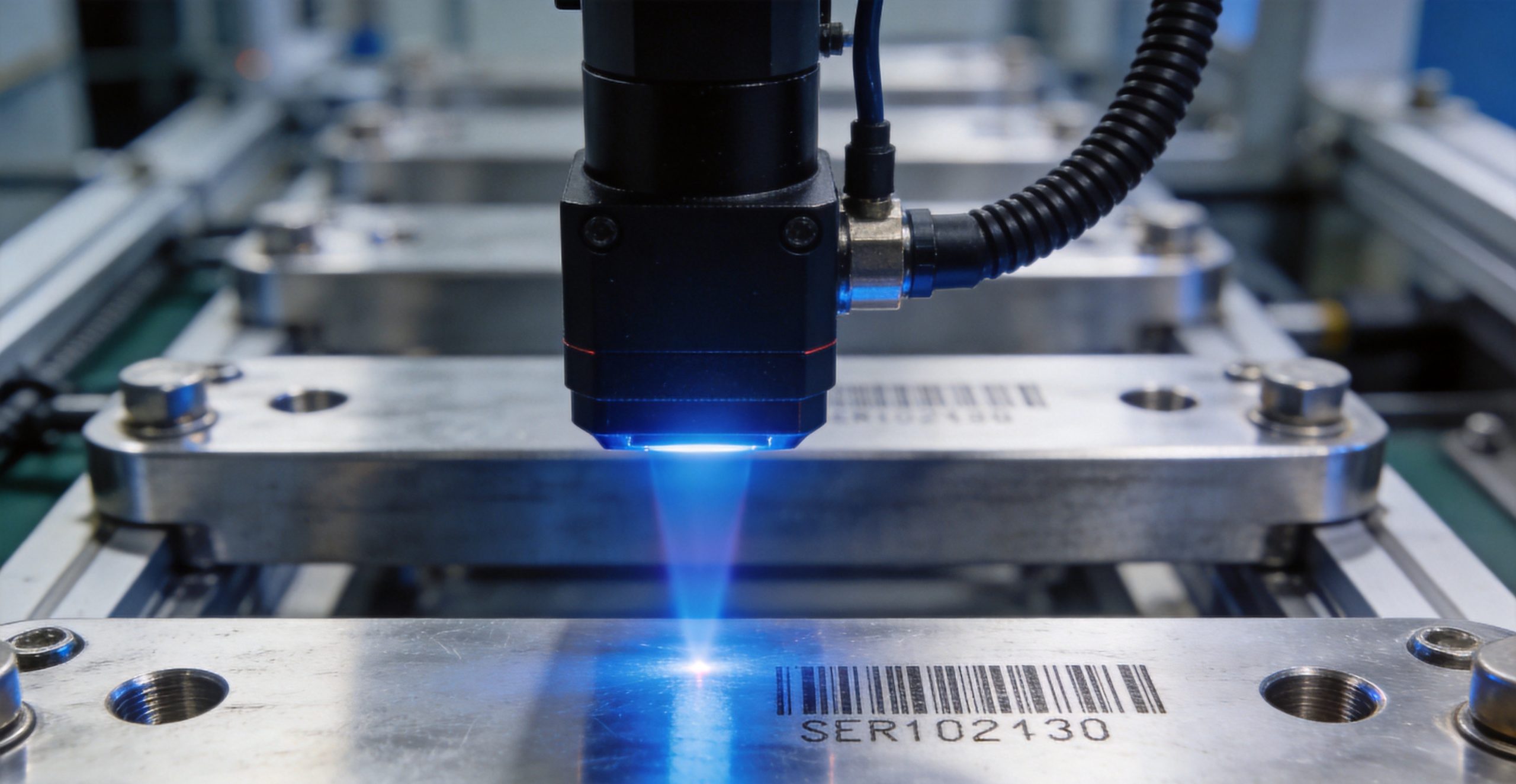
Laser marking has become essential in modern manufacturing. From tiny medical devices to heavy industrial equipment, nearly every product made today carries a permanent laser mark — serial numbers, barcodes, logos, date codes, and more.
But what exactly is laser marking used for across industries? In this comprehensive guide, we explore 12 major industrial applications of laser marking, covering everything from automotive traceability to jewelry engraving, from electronics manufacturing to food packaging.
Whether you’re evaluating a laser marking machine for your business or just curious about how this technology is used, this guide will give you a thorough understanding of laser marking’s role in industry today.
—
What Is Laser Marking?
Laser marking is the process of using a focused laser beam to create a permanent mark on a material surface. Unlike engraving (which removes material) or printing (which adds ink), laser marking changes the surface properties of the material itself — creating a durable, high-contrast mark without consumables.
Key advantages of laser marking:
- Permanent: Resists wear, abrasion, and chemicals
- Precise: Can mark features as small as 10 microns
- Fast: Thousands of marks per minute in production
- Non-contact: No tool wear, no force on the part
- No consumables: No ink, solvents, or labels to replace
- Versatile: Works on metals, plastics, glass, ceramics, and more
These advantages have made laser marking the preferred method for permanent product identification across nearly every industry.
—
1. Automotive & Transportation
Industry: Automotive, Truck & Off-Highway
Laser type: Fiber laser (mostly automated / inline)
Power range: 20W – 100W
The automotive industry is one of the largest users of laser marking. Every vehicle contains hundreds of laser-marked components, from engine parts to electronic modules.
Common Automotive Applications:
- Engine components: Cylinder heads, crankshafts, pistons, valves, camshafts
- Chassis parts: Frame rails, suspension components, brake calipers
- Transmission: Gears, shafts, clutch plates, torque converters
- VIN marking: Vehicle Identification Number on body panels and frames
- Tire and wheel: Rim marking, tire sidewall marking (specialized CO2/UV)
- Electrical components: Alternators, starters, sensors, wiring harnesses
- Safety systems: Airbag components, brake lines, seatbelt parts
- Battery systems: EV battery cells, modules, and busbars
Why Laser for Automotive?
- Traceability: Critical for quality control and recalls (ISO/TS 16949)
- Durability: Marks must last the lifetime of the vehicle
- High speed: Matches fast-paced assembly lines
- 2D codes: Data Matrix codes store large amounts of information in tiny spaces
- Automation: Easily integrated into robotic production lines
- Direct part marking (DPM): No labels to fall off or fade
Regulatory note: Automotive laser marking must comply with industry standards like ISO/TS 16949 and often requires 2D code verification (grade verification) at the point of marking.
—
2. Aerospace & Defense
Industry: Aerospace, Aviation & Military
Laser type: Fiber laser, UV laser (high-precision)
Power range: 20W – 100W
Aerospace demands the highest standards of quality and traceability. When a component fails at 35,000 feet, the consequences can be catastrophic. Laser marking provides permanent, reliable identification that meets the strictest aerospace requirements.
Common Aerospace Applications:
- Engine components: Turbine blades, compressor blades, combustion chambers
- Airframe structures: Stringers, brackets, fasteners, landing gear
- Fasteners: Bolts, nuts, rivets, screws (micro-marking)
- Hydraulic systems: Pipes, fittings, valves, cylinders
- Avionics: Circuit boards, connectors, sensors, displays
- Military ordnance: Missiles, bombs, ammunition casings
- Space components: Satellite parts, rocket components, heat shields
- Maintenance tracking: Parts with service life limits (life-limited parts)
Why Laser for Aerospace?
- Extreme durability: Marks survive high temperatures, vibration, and corrosion
- Tiny parts: Can mark very small components with high precision
- No material removal: Annealing marks don’t affect part strength (critical for fatigue)
- Full traceability: Every part can be tracked from manufacture to end-of-life
- Meets standards: Complies with AS9100, NADCAP, and military specifications
- Barcode/Data Matrix: High-density codes for part serialization
Fun fact: Modern jet engines can have 10,000+ individual parts, many of which are laser-marked for traceability throughout their service life.
—
3. Medical Devices & Healthcare
Industry: Medical Devices, Dental & Pharmaceutical
Laser type: Fiber laser, UV laser (ultra-fine, clean marks)
Power range: 10W – 50W
Medical device marking is one of the most demanding applications for laser technology. Marks must be permanent, biocompatible, and readable — even after sterilization.
Common Medical Applications:
- Surgical instruments: Forceps, scissors, scalpels, retractors
- Orthopedic implants: Hip stems, knee implants, bone screws, plates
- Dental implants: Titanium screws, abutments, crowns
- Cardiovascular devices: Stents, pacemaker housings, catheters
- Syringes and needles: Barrels, plungers, needle hubs
- Surgical tools: Drills, saws, orthopedic instruments
- Hearing aids: Tiny components and housings
- Lab equipment: Pipettes, test tubes, slides, beakers
- Medical packaging: Blister packs, labels, sterilization indicators
Why Laser for Medical Devices?
- Biocompatible: Laser marks don’t leach chemicals or affect tissue response
- Sterilization resistant: Survives autoclaving, EtO, gamma radiation
- Micro-precision: Can mark tiny parts (stents, screws) without damage
- Permanent: Marks don’t fade or wear off with repeated use/cleaning
- Traceability: UDI (Unique Device Identification) requirements
- No consumables: No risk of ink contamination
- High contrast: Easy to read for tracking and inventory
Regulatory note: Medical device laser marking must comply with FDA (US), CE (EU), and UDI regulations. Full process validation is required for implantable devices.
—
4. Electronics & Semiconductors
Industry: Electronics, Semiconductors & PCB Manufacturing
Laser type: Fiber laser, UV laser, green laser (micro-marking)
Power range: 5W – 50W
Electronics keeps getting smaller and more powerful, and laser marking is the only technology that can keep up with the demand for smaller, denser marks on increasingly miniaturized components.
Common Electronics Applications:
- PCB marking: Serial numbers, date codes, manufacturer logos on circuit boards
- Semiconductor chips: Wafer marking, die marking, package marking
- Connectors: USB, HDMI, Ethernet, power connectors
- Capacitors & resistors: Surface mount component marking
- LEDs: Diode marking, binning codes, wavelength codes
- Cables & wires: Wire marking, cable identification, length markers
- Batteries: Cell marking, module identification, safety information
- Consumer electronics: Phone components, laptop parts, wearables
- Memory devices: USB drives, SD cards, SSDs
Why Laser for Electronics?
- Ultra-fine marks: Can mark features smaller than 20μm
- Non-contact: No mechanical stress on delicate components
- Low heat: Doesn’t damage sensitive electronics (especially UV)
- High speed: Matches high-volume electronics manufacturing
- Permanent: Resists handling, cleaning, and environmental exposure
- Anti-counterfeiting: Hidden marks and micro-text for authentication
- No consumables: Clean process — no ink contamination risk
Trend: The growth of electric vehicles and consumer electronics is driving rapid growth in laser marking for battery and semiconductor applications.
—
5. Tools & Hardware
Industry: Hand Tools, Power Tools & Industrial Hardware
Laser type: Fiber laser (desktop / automated)
Power range: 20W – 50W
Walk into any hardware store and you’ll see laser-marked tools everywhere. Wrenches, drill bits, screwdrivers — nearly all quality hand tools carry permanent laser marks.
Common Tool & Hardware Applications:
- Hand tools: Wrenches, screwdrivers, pliers, hammers, sockets
- Power tools: Drills, saws, grinders, sanders (body and parts)
- Cutting tools: End mills, drills, taps, dies, reamers
- Measuring tools: Calipers, micrometers, rulers, gauges
- Fasteners: Bolts, nuts, screws, washers (batch marking)
- Bearings: Ball bearings, roller bearings, linear bearings
- Handles & grips: Brand logos, size markings, part numbers
- Tool boxes & storage: Identification, organization labels
Why Laser for Tools & Hardware?
- Durable: Marks resist abrasion, oil, and heavy use
- Professional appearance: Clean, high-quality look for premium brands
- Size marking: Permanent size numbers that won’t wear off
- Branding: Logo and brand name on every tool
- Batch coding: Date codes, shift codes, lot numbers
- Anti-counterfeiting: Distinguishes genuine from fake tools
- Fast: Can mark hundreds of parts per minute
Industry shift: Most tool manufacturers have switched from etching and stamping to laser marking because it produces better quality marks at lower cost.
—
6. Jewelry & Luxury Goods
Industry: Jewelry, Watches & Luxury Accessories
Laser type: Fiber laser (pulsed), green laser (for gold/silver)
Power range: 20W – 100W
Laser marking has revolutionized the jewelry industry. What used to require skilled hand engravers can now be done in seconds with a laser — with perfect precision and consistency.
Common Jewelry Applications:
- Ring engraving: Wedding bands, engagement rings, personalized messages
- Necklaces & pendants: Names, dates, quotes, custom designs
- Bracelets: Identification bracelets, charm engraving
- Earrings: Backs, posts, custom designs
- Watches: Case backs, dials, movement components, serial numbers
- Belt buckles: Monograms, logos, custom designs
- Cufflinks: Initials, patterns, company logos
- Trophies & awards: Names, dates, achievements
- Pens & lighters: Personalized gifts, corporate branding
Why Laser for Jewelry?
- Precision: Can engrave tiny text and intricate designs
- All metals: Works on gold, silver, platinum, titanium, stainless steel
- No contact: No risk of damaging delicate pieces
- Deep engraving: Can create deep, permanent marks that last forever
- Black marking: Can create black marks on stainless steel and titanium
- Consistency: Identical results every time (great for production)
- Customization: Easy to do one-off custom pieces
Business impact: Laser engraving has made personalized jewelry affordable and accessible — a huge growth driver for the jewelry industry.
—
7. Food & Beverage Packaging
Industry: Food & Beverage, Packaging & Printing
Laser type: CO2 laser, UV laser (high-speed)
Power range: 10W – 100W
Walk down any supermarket aisle and you’ll see laser-marked packages everywhere. Date codes, lot numbers, batch codes — most are applied with lasers at production line speeds.
Common Food & Beverage Applications:
- Date codes: “Best before,” “use by,” “sell by” dates
- Batch/lot codes: Production tracking and recall information
- Product codes: SKU numbers, barcodes, QR codes
- Beverage bottles: Glass bottles (beer, wine, spirits)
- Cans & tins: Aluminum cans, food tins, aerosol cans
- Plastic packaging: PET bottles, food trays, blister packs
- Labels & tags: Product labels, price tags, shipping labels
- QR codes: Marketing, nutrition info, traceability links
Why Laser for Food Packaging?
- High speed: Can mark thousands of products per minute on production lines
- No consumables: No ink, solvents, or labels to replenish
- Permanent: Doesn’t smudge, fade, or rub off
- Food-safe: No chemicals that could contaminate food
- Versatile: Works on paper, plastic, glass, metal, and more
- Reliable: 24/7 operation with minimal maintenance
- Code variety: Supports all standard barcode and 2D code formats
Regulatory note: Food date coding is heavily regulated by the FDA (US), EFSA (EU), and other agencies. Accurate, legible codes are a legal requirement.
—
8. Plumbing & HVAC
Industry: Plumbing, HVAC & Building Trades
Laser type: Fiber laser (desktop / portable)
Power range: 20W – 50W
Plumbing and HVAC parts need permanent identification for installation, warranty, and code compliance. Laser marking provides durable marks that survive harsh environments.
Common Plumbing & HVAC Applications:
- Pipes & fittings: Copper, PVC, steel pipe marking
- Valves: Ball valves, gate valves, check valves (size, rating, brand)
- Faucets & fixtures: Brand logos, model numbers, finish codes
- HVAC equipment: Furnaces, AC units, heat pumps (serial numbers)
- Ductwork: Identification labels, size markers, damper labels
- Water heaters: Serial numbers, date codes, safety information
- Pumps: Circulating pumps, sump pumps, well pumps
- Filters & regulators: Part numbers, replacement codes, flow ratings
Why Laser for Plumbing & HVAC?
- Durable: Survives moisture, temperature changes, and handling
- Rust resistant: Marks on galvanized and stainless steel don’t corrode
- Professional appearance: Clean, high-quality brand marks
- Traceability: Serial numbers for warranty and recall purposes
- Code compliance: Size and rating markings meet plumbing codes
- Variety of materials: Works on copper, brass, steel, PVC, and more
—
9. Mold & Tool Identification
Industry: Mold Manufacturing, Die Casting, Plastic Injection
Laser type: Fiber laser (deep marking / engraving)
Power range: 50W – 200W
Molds and tools are expensive assets — some costing hundreds of thousands of dollars. Proper identification is essential for inventory management, maintenance tracking, and cavity identification.
Common Mold & Tool Applications:
- Mold identification: Mold number, customer name, part number
- Cavity marking: Cavity numbers (1, 2, 3…) on multi-cavity molds
- Date stamps: Replaceable date inserts for molded parts
- Mold maintenance: Last service date, service history, tool life tracking
- Electrode marking: EDM electrodes with identification codes
- Die identification: Stamping dies, forging dies, extrusion dies
- Jigs & fixtures: Assembly fixtures, welding jigs, inspection gauges
- Cutting tools: End mills, drills, taps (as mentioned in Tools section)
Why Laser for Mold Identification?
- Deep marking: Can engrave deep enough to survive mold cleaning and polishing
- Precise: Small cavity numbers in tight spaces
- Permanent: Marks last the lifetime of the mold
- No impact: Doesn’t damage delicate mold features (unlike stamping)
- Fine detail: Can mark small text and complex logos
- Hard materials: Works on hardened tool steel, carbide, and more
—
10. Promotional Products & Gifts
Industry: Promotional Products, Awards & Personalized Gifts
Laser type: Fiber laser (metals), CO2 laser (non-metals)
Power range: 20W – 60W
The promotional products industry has been transformed by laser marking. Personalized mugs, pens, keychains, and awards — all made possible (and affordable) by laser technology.
Common Promotional Product Applications:
- Drinkware: Mugs, tumblers, water bottles, wine glasses
- Writing instruments: Pens, pencils, markers (company logos)
- Keychains: Metal, leather, acrylic keychains
- Awards & trophies: Plaques, cups, medals, crystal awards
- Name badges: Employee badges, conference badges
- Phone cases: Custom engraved phone and tablet cases
- Leather goods: Wallets, belts, portfolios, business card holders
- Corporate gifts: Executive gifts, holiday gifts, employee recognition
- Signage: Desk signs, door signs, nameplates
Why Laser for Promotional Products?
- Customization: Easy to personalize each item with names or messages
- Fast turnaround: Quick setup, no tooling changes
- High quality: Professional, permanent results
- Low cost per mark: No consumables = low operating cost
- Versatile: Works on metal, wood, leather, acrylic, glass, and more
- Small batches: Ideal for small orders and one-off custom pieces
- High perceived value: Laser engraving feels premium to customers
—
11. Bearing & Precision Components
Industry: Bearings, Motors & Precision Mechanical Parts
Laser type: Fiber laser (high-speed, automated)
Power range: 20W – 50W
Bearings and precision components require permanent, accurate marking for traceability, quality control, and anti-counterfeiting. Laser marking is the standard in this industry.
Common Bearing & Precision Applications:
- Ball bearings: Inner ring, outer ring, or shield marking
- Roller bearings: Tapered, cylindrical, spherical roller bearings
- Linear bearings: Linear guides, ball screws, linear rails
- Motor components: Shafts, rotors, stators, housings
- Gearboxes: Gears, shafts, housings, covers
- Pneumatic components: Cylinders, valves, fittings
- Hydraulic components: Pumps, valves, cylinders, motors
- Seals & gaskets: Part numbers, size codes, material codes
Why Laser for Bearings & Precision Parts?
- High speed: Can mark bearings as they come off the production line
- Consistent quality: Every mark is identical (critical for QC)
- Small marks: Can fit a lot of information in a small space
- Hard surfaces: Works on hardened bearing steel
- Round parts: Rotary attachments for circumferential marking
- 2D codes: Data Matrix codes for full traceability
- Anti-counterfeiting: Helps identify genuine vs. counterfeit bearings
—
12. Signage & Industrial Identification
Industry: Signage, Industrial Labeling & Safety
Laser type: Fiber laser (metal), CO2 laser (non-metal)
Power range: 30W – 100W
Industrial facilities need clear, durable signage and identification for safety, compliance, and efficiency. Laser marking creates permanent labels and signs that stand up to harsh industrial environments.
Common Signage & Identification Applications:
- Safety signs: Warning signs, hazard labels, emergency information
- Equipment ID: Machine nameplates, serial plates, rating plates
- Pipe markers: Pipe identification labels (content, direction, size)
- Valve tags: Valve identification tags for process plants
- Control panels: Button labels, indicator lights, switch identification
- Asset tags: Equipment tracking tags, barcode labels
- Nameplates: Equipment nameplates, specification plates
- Switchgear & electrical: Panel labels, circuit breaker identification
- Warehouse labels: Rack labels, bin labels, location markers
Why Laser for Industrial Signage?
- Durability: Survives chemicals, UV exposure, temperature extremes
- Professional appearance: Clean, crisp text and graphics
- Customizable: Easy to make custom signs and labels on demand
- No fading: Unlike printed labels, laser marks don’t fade in sunlight
- Chemical resistant: Resists oils, solvents, and cleaning chemicals
- Variety of materials: Anodized aluminum, stainless steel, acrylic, laminated plastics
—
Honorable Mentions: More Laser Marking Applications
Firearms & Defense Components
Serial numbers, manufacturer marks, and custom engravings on firearms and accessories. Laser marking is the standard method for firearm ATF compliance in the US.
Musical Instruments
Brass and woodwind instruments, guitar parts, drum hardware — all commonly laser-marked with brand logos and serial numbers.
Sporting Goods
Golf clubs, bicycles, fitness equipment, outdoor gear — laser marking provides durable brand identification and personalization.
Architectural Hardware
Door handles, hinges, locks, cabinet hardware — laser-marked with brand names and finish codes.
Agricultural Equipment
Tractors, harvesters, irrigation equipment — heavy-duty components marked for traceability and warranty.
—
How to Choose the Right Laser Marking Machine
With so many options available, choosing the right laser marking machine can be confusing. Here’s a quick guide:
By Material
| Material | Recommended Laser Type | Typical Power |
|---|---|---|
| Stainless steel | Fiber laser | 20–50W |
| Carbon steel | Fiber laser | 20–50W |
| Aluminum | Fiber laser | 30–100W |
| Brass/copper | Fiber laser (green for best results) | 30–100W |
| Gold/silver | Fiber laser (pulsed) | 20–50W |
| Plastics (ABS, PVC, etc.) | Fiber laser or UV laser | 20–50W |
| Glass | UV laser or CO2 laser | 3–30W |
| Wood/leather | CO2 laser | 30–60W |
| Acrylic | CO2 laser | 30–60W |
By Production Volume
- Low volume / job shop: Desktop fiber laser (20–50W)
- Medium volume: Workstation with rotary and auto-focus
- High volume: Inline automated system with vision and code verification
- Micro / precision: UV laser with precision positioning stages
By Budget
- Entry-level ($2,000–$5,000): 20–30W desktop fiber laser
- Mid-range ($5,000–$15,000): 30–50W industrial desktop or portable
- Industrial ($15,000–$50,000+): Automated system with conveyor and vision
—
The Future of Laser Marking
Laser marking technology continues to evolve rapidly. Here are key trends to watch:
1. UV Laser Growth
UV laser marking is growing fast, driven by electronics, medical, and glass applications. As prices come down, more manufacturers will switch to UV for ultra-fine marking.
2. AI and Machine Vision
Future laser marking systems will include AI-powered quality inspection — automatically verifying mark quality and readability at production speeds.
3. Green Lasers for Copper
Green lasers (532nm) mark copper much more efficiently than infrared lasers. As battery and electronics manufacturing grows, demand for green laser marking will increase.
4. Anti-Counterfeiting Features
Laser marking is increasingly used for brand protection — micro-text, hidden marks, and nanostructures that are difficult to counterfeit.
5. Integrated Production Lines
Laser marking is becoming just one step in fully automated production lines that include marking, inspection, sorting, and packaging — all in one continuous process.
—
Final Thoughts
Laser marking has become ubiquitous in modern manufacturing. From the smallest microchip to the largest industrial machine, nearly every product you encounter carries a laser mark of some kind.
The technology’s key advantages — permanence, precision, speed, and versatility — have made it the preferred choice for product identification across dozens of industries. And as laser technology continues to improve and become more affordable, even more applications will emerge.
If you’re considering adding laser marking to your operation, now is a great time. The technology is mature, reliable, and delivers a quick return on investment for most applications.
—
Ready to find the right laser marking machine for your application? [Browse our fiber laser marking machines](https://www.transonlaser.com/product-category/laser-marker/) or [contact us](https://www.transonlaser.com/contact-us/) for a free consultation. We can test your parts with our laser markers and show you the results — no obligation.
*Which laser marking application surprised you the most? Drop a comment below — we’d love to hear your thoughts.*