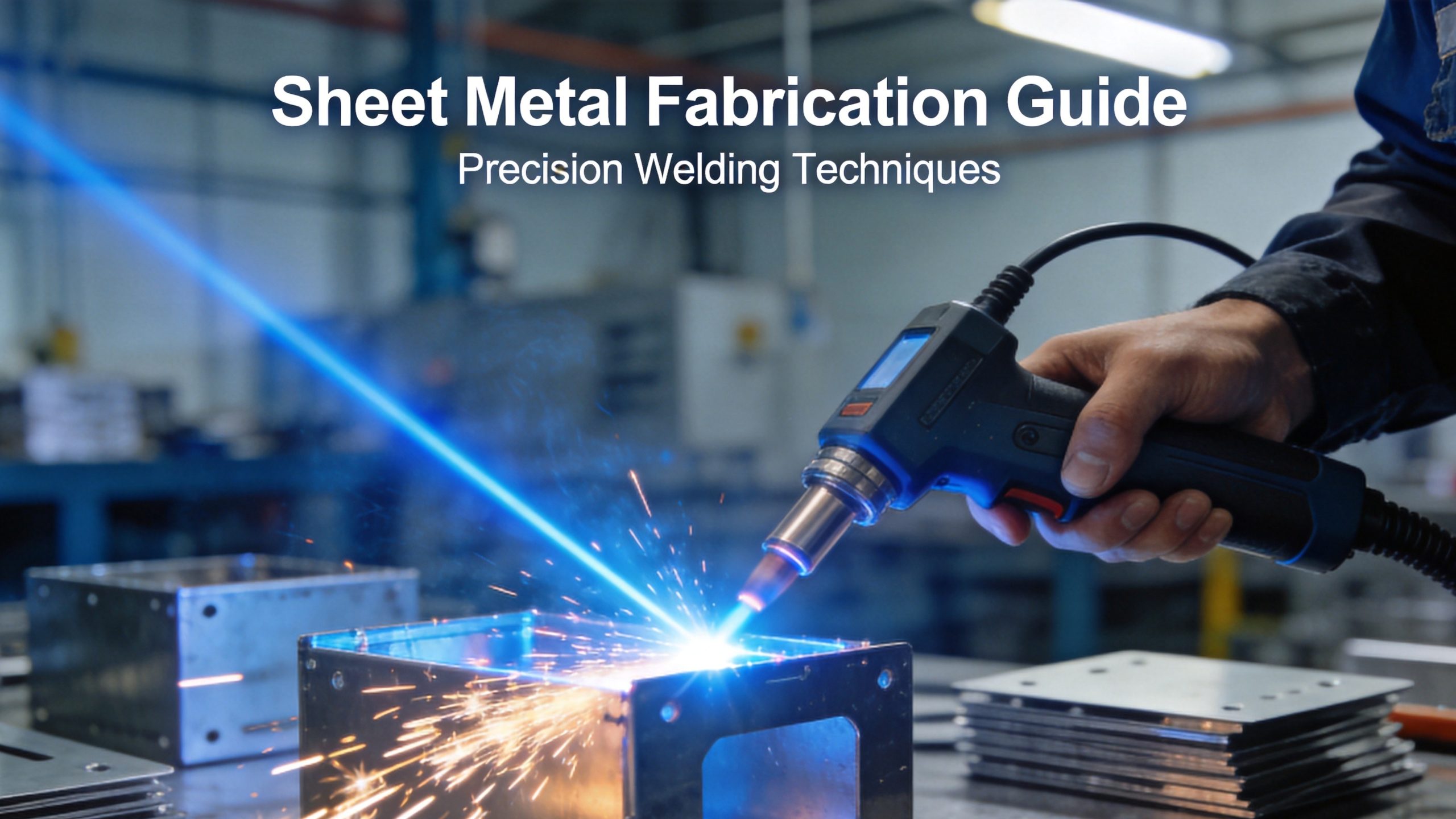
In the sheet metal fabrication industry, welding is one of the most critical — and most time-consuming — operations. Traditional methods like TIG and MIG welding have been the standard for decades, but they’re slow, require highly skilled labor, and produce inconsistent results.
Handheld fiber laser welding is changing all that. It’s faster, easier, and produces higher-quality welds than traditional methods — and it’s rapidly becoming the go-to welding technology for sheet metal shops worldwide.
In this guide, we’ll cover everything you need to know about laser welding for sheet metal fabrication: how it works, what it’s good for, how it compares to traditional methods, real-world applications, and whether it’s the right investment for your shop.
Why Sheet Metal Fabricators Are Switching to Laser Welding
The sheet metal industry is competitive. Margins are tight, skilled welders are hard to find, and customers expect faster turnaround and higher quality. Laser welding addresses all these pain points:
1. It’s 2–5x Faster Than TIG Welding
A handheld laser welder can complete a weld in seconds that would take a TIG welder minutes. For typical sheet metal assemblies (1–5mm thick), laser welding is dramatically faster. This directly translates to higher throughput and more parts per day.
2. Less Skill Required
TIG welding takes months of training and years to master. A handheld laser welder? Most operators can be producing quality welds after 1–2 days of training. This solves the skilled welder shortage problem many shops face.
3. Cleaner Welds, Less Post-Processing
Laser welds are smooth, clean, and aesthetically pleasing — no spatter, minimal distortion, and often no grinding or polishing needed. This eliminates one of the most time-consuming steps in sheet metal fabrication.
4. Lower Operating Cost
No shielding gas needed (for most applications). No consumable tips or nozzles. Less rework. Less labor per part. The savings add up quickly.
5. Versatility
One machine can weld steel, stainless steel, aluminum, brass, and copper. It can handle butt joints, lap joints, fillet welds, and more. Many machines also do laser cleaning and thin-sheet cutting with a head change.
How Laser Welding Works for Sheet Metal
A handheld fiber laser welding machine uses a high-power fiber laser beam to melt and fuse metal. Here’s the basic process:
- Laser generation: A fiber laser source generates a concentrated beam of infrared light
- Beam delivery: The laser travels through an optical fiber cable to the handheld welding gun
- Focusing: Optics in the gun focus the laser to a tiny spot on the workpiece
- Melting: The focused laser rapidly melts the metal at the joint
- Solidification: The molten metal quickly solidifies, forming a strong weld
The key advantage is that the laser energy is extremely concentrated — it melts the metal in milliseconds with minimal heat input to the surrounding area. This is why laser welding causes so little distortion.
Wire Feeder Option
For thicker materials or gaps between parts, many laser welders include an optional automatic wire feeder. The wire feeds into the weld pool at a controlled rate, filling gaps and adding material. This is similar to MIG welding but much faster and cleaner.
For most sheet metal applications (0.5–3mm), no filler wire is needed — the laser simply melts the two edges together.
Laser Welding vs. Traditional Methods for Sheet Metal
Let’s compare the three most common welding methods used in sheet metal fabrication:
| Factor | Laser Welding | TIG Welding | MIG Welding |
|---|---|---|---|
| Speed (thin steel) | 2–10 m/min | 0.5–2 m/min | 1–4 m/min |
| Skill level required | Low | Very high | Medium |
| Weld quality | Excellent | Excellent | Good |
| Distortion | Very low | Medium | High |
| Post-processing | Minimal | Moderate | High |
| Shielding gas | Usually not needed | Required | Required |
| Consumables | Very few | Many | Many |
| Typical material thickness | 0.5–5mm | 0.5–10mm+ | 1–12mm+ |
| Cost per meter of weld | Lowest | Highest | Medium |
Laser vs. TIG for Sheet Metal
TIG produces beautiful welds but is extremely slow and requires a highly skilled welder. Laser welding matches or exceeds TIG quality at 3–5x the speed, with a less skilled operator. For sheet metal, laser welding is almost always more efficient.
Laser vs. MIG for Sheet Metal
MIG is faster than TIG but produces more spatter, more distortion, and lower-quality welds that often need grinding. Laser welding is cleaner, faster on thin materials, and requires less post-processing. For thin sheet metal, laser wins on both speed and quality.
What Can You Weld? Materials and Thicknesses
Laser welding works on most common sheet metal materials:
Steel / Mild Steel
Stainless Steel
Aluminum
Galvanized Steel
Brass and Copper
Pro tip from Transon Laser’s technical team: For sheet metal shops working primarily with 1–3mm steel and stainless steel, a 1500W handheld laser welder is the sweet spot. It handles 90% of common sheet metal welding applications at a price point that delivers fast ROI.
Common Sheet Metal Applications
Laser welding is used across a wide range of sheet metal products:
1. Metal Enclosures and Cabinets
Electrical enclosures, server racks, control cabinets, junction boxes — laser welding is perfect for the clean, straight seams these products require. No grinding means faster production and better-looking products.
2. Kitchen Equipment and Stainless Steel Fabrication
Commercial kitchen equipment, food processing machinery, stainless steel countertops, and sinks all benefit from laser welding’s clean, hygienic welds that don’t harbor bacteria.
3. Metal Furniture
Chairs, tables, shelves, and decorative metal items — laser welding produces clean joints that look great with minimal finishing. The speed advantage means you can produce more furniture per day.
4. HVAC and Ductwork
Sheet metal ductwork, vents, and HVAC components can be welded quickly with a laser welder. The portability of a handheld unit means you can weld large assemblies in place.
5. Automotive Sheet Metal Components
Body panels, brackets, exhaust components, and chassis parts — automotive suppliers are increasingly adopting laser welding for its speed and consistency.
6. Lighting Fixtures
Metal light fixtures, lamp bases, and housings — laser welding produces clean, invisible joints that are essential for decorative lighting products.
7. Signage and Display
Metal signs, display stands, and point-of-purchase displays — laser welding lets fabricators produce high-quality signage faster than traditional methods.
8. Agricultural Equipment
Metal brackets, panels, guards, and small equipment components — laser welding handles the variety of parts found in agricultural fabrication.
Joint Types and Welding Positions
Handheld laser welding is versatile and can handle most common sheet metal joint types:
Butt Joints
Two pieces of metal joined edge-to-edge. The most common joint type in sheet metal fabrication. Laser welding excels at butt joints, producing strong, clean welds with minimal preparation.
Lap Joints
One piece overlapping another. Common in thin sheet metal assemblies. Laser welding can weld through the top sheet into the bottom sheet, creating a strong bond without visible weld on the top surface.
Fillet Welds
Welding at the intersection of two perpendicular pieces (inside corner). Laser welders can do fillet welds, though they require a bit more technique than butt joints.
Edge Welds
Welding along the edge of a folded or bent sheet. Common in box and enclosure fabrication.
Spot Welding
Welding at discrete points rather than a continuous seam. Useful for tacking parts together before final assembly, or for applications that don’t need a full weld.
What about position? Handheld laser welders can be used in all positions — flat, horizontal, vertical, and overhead. The weld pool is small and solidifies quickly, so it doesn’t sag like traditional weld pools do.
Real-World Productivity Example
Let’s look at a typical sheet metal shop scenario to see the actual productivity gains:
Before: TIG Welding
Daily labor cost: (8 + 0) × 8 hours = 84
Daily consumables: 5
Total daily cost: 99
Cost per enclosure: 99 ÷ 12 = 3.25
After: Handheld Laser Welding
Daily labor cost: 0 × 8 hours = 60
Daily consumables:
Total daily cost: 62
Cost per enclosure: 62 ÷ 35 = .63
Results
This is a dramatic example, but it reflects what many sheet metal shops experience when they switch to laser welding. The combination of higher speed, lower labor cost, and eliminated post-processing adds up to massive savings.
Tips for Success with Laser Welding in Sheet Metal
1. Start with the Right Power
For most sheet metal work (0.5–3mm), a 1500W machine is ideal. It provides enough power for steel, stainless steel, and aluminum at this thickness range, while keeping costs reasonable. If you regularly weld 4–6mm material, step up to 2000W or 3000W.
2. Invest in Training
While laser welding is easy to learn, proper training ensures your operator gets the best results and doesn’t damage the machine. Most reputable manufacturers (including Transon Laser) include training with purchase.
3. Prepare Joints Properly
Laser welding works best with tight-fitting joints. For butt joints, the gap should be less than the material thickness. If gaps are larger, use the wire feeder. Clean, oxide-free surfaces produce the best welds.
4. Use Appropriate Safety Equipment
Laser welding uses Class 4 laser radiation. Always use:
5. Maintain the Machine Regularly
A well-maintained laser welder lasts longer and performs better. Daily tasks include checking the protective lens and cleaning air filters. Follow the manufacturer’s maintenance schedule for best results.
6. Start with Simple Jobs
If you’re new to laser welding, start with simple butt joints on mild steel before moving to more complex joints or trickier materials like aluminum.
Choosing the Right Machine for Your Shop
Questions to Ask Before Buying:
Why Transon Laser for Sheet Metal Fabrication?
Transon Laser’s TSW series handheld laser welders are popular with sheet metal fabricators for several reasons:
- Reliable laser sources: Raycus or Maxphotonics fiber lasers — industry-proven and widely supported
- Multiple power options: 1000W, 1500W, 2000W, and 3000W models available
- Wire feeder included: Standard on most models, so you can handle gaps and thicker materials
- 3-in-1 capability: Weld, clean, and cut with head changes (select models)
- English-speaking support: 24/7 technical support from engineers who speak English
- Competitive pricing: Industrial quality at prices that make ROI calculations easy
- Fast delivery: 7–15 days for standard models
If you’re a sheet metal fabricator looking to increase production speed and reduce costs, a handheld laser welder from Transon Laser is one of the best investments you can make.
Related Reading: Working with aluminum specifically? See our dedicated guide: Can You Laser Weld Aluminum? with material-specific tips, power requirements, and common alloy recommendations. For more on keeping your laser welding equipment in top condition, check out our complete fiber laser welding machine maintenance guide. Learn more about how this technology is transforming the auto industry in our complete guide to laser welding in automotive manufacturing.
Final Thoughts
For sheet metal fabrication, handheld laser welding is no longer a niche technology — it’s becoming the new standard. The speed, quality, and cost advantages are simply too large to ignore for shops that want to stay competitive.
If you’re still relying on TIG or MIG welding for your sheet metal work, the question isn’t whether you should switch to laser welding — it’s when. And with machines available for as little as ,000–,000, the barrier to entry has never been lower.
Further Reading: