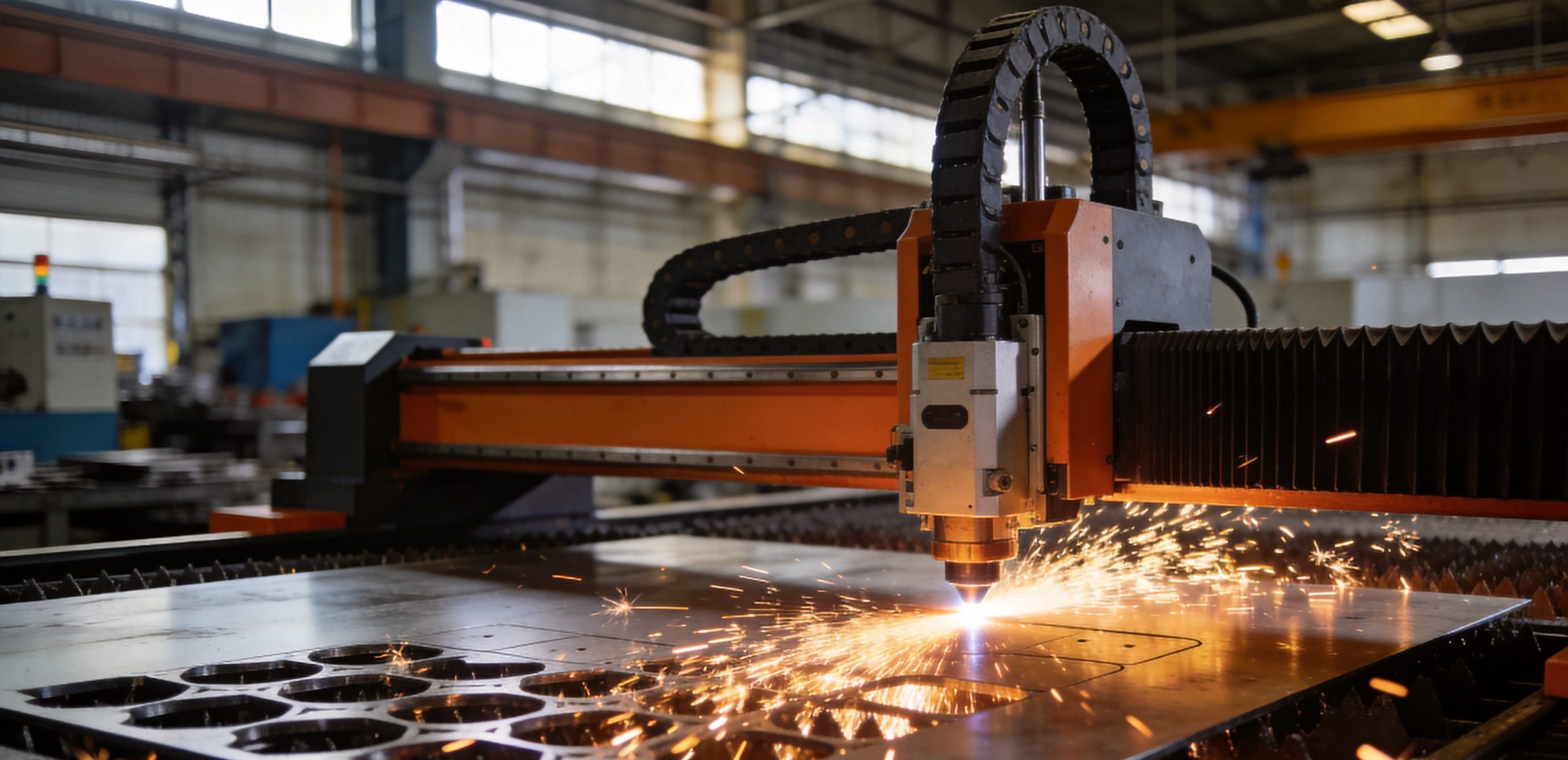
Introduction
Fiber laser cutting has revolutionized metal fabrication. What was once a technology reserved for large, high-volume manufacturing operations is now accessible to job shops, metal service centers, small manufacturers, and even hobbyists. The market has exploded with options—different power levels, bed sizes, configurations, and price points.
But with more choices comes more complexity. Buying the wrong fiber laser cutting machine can mean overpaying for capacity you’ll never use, or worse, ending up with equipment that can’t keep up with your production demands or deliver the quality your customers expect.
This buyer’s guide walks through everything you need to know when shopping for a fiber laser cutting machine in 2026. We’ll cover how the technology works, the main types of machines available, the critical specifications to compare, real-world application considerations, safety requirements, and how to evaluate suppliers. Whether you’re buying your first fiber laser or upgrading an existing one, this guide will help you make a confident, well-informed decision.
How Fiber Laser Cutting Works (Quick Overview)
Before diving into buying decisions, let’s briefly cover the technology. A fiber laser uses optical fiber doped with rare-earth elements (typically ytterbium) as the gain medium. Pump diodes inject light into the fiber, which is amplified as it travels through the doped fiber core. The resulting laser beam—typically around 1064 nm wavelength—is then delivered through a flexible fiber optic cable to the cutting head.
At the cutting head, the beam is focused through a lens into a tiny spot on the workpiece. The intense energy melts and vaporizes the metal, while an assist gas (usually oxygen, nitrogen, or compressed air) blows the molten material away through the kerf.
Key advantages of fiber laser cutting:
- High cutting speed, especially on thin to medium sheet metal
- Excellent cut quality with narrow kerfs and smooth edges
- Low operating cost due to high energy efficiency (up to 30-40% wall-plug efficiency)
- Low maintenance compared to CO₂ lasers—no mirrors to align, no gas refills
- Ability to cut reflective metals like aluminum, copper, and brass
- Easy automation with CNC control and material handling systems
These advantages explain why fiber lasers have become the dominant cutting technology in the metal fabrication industry, steadily replacing CO₂ lasers and plasma cutters for many applications.
Types of Fiber Laser Cutting Machines
Understanding the main categories will help you narrow down your options quickly.
By Machine Configuration
Sheet Metal Laser Cutters (Flatbed) The most common type, designed for cutting flat sheet metal. Available in various bed sizes—from small 1300x900mm hobby machines to large 6000x2500mm production machines. Best for: sheet metal fabrication, job shops, metal service centers, manufacturing.
Tube and Pipe Laser Cutters Specialized machines designed specifically for cutting round, square, rectangular, and other profile tubes. Some are dedicated tube machines; others combine sheet and tube cutting in one system. Best for: tube fabrication, furniture manufacturing, automotive, construction.
Combined Sheet + Tube Machines Hybrid machines that can cut both flat sheet and tube profiles by adding a rotary chuck to a standard flatbed machine. They offer versatility but typically sacrifice some performance on one side compared to dedicated machines. Best for: shops with mixed sheet and tube work but limited budget for two separate machines.
Handheld Laser Cutters Portable, gun-style machines for on-site cutting and light fabrication work. Lower power (usually 1000–2000W) and less precision than CNC machines, but extremely flexible. Best for: field service, repair work, on-site construction, light fabrication.
3D / Robotic Laser Cutters Systems where the cutting head is mounted on a robot arm or 5-axis gantry, enabling cutting of 3D formed parts, deep-drawn components, and complex geometries. Best for: automotive, aerospace, appliance manufacturing.
By Power Level
- 500–1000W: Entry-level machines for thin sheet metal (0.5–3mm). Hobbyists, small shops, and precision parts.
- 1000–2000W: The most popular range for general fabrication. Handles sheet from 0.5mm up to 8–12mm steel. Good balance of speed and cost.
- 2000–3000W: Mid-range production machines. Cuts up to 16–20mm steel, faster on thinner materials. Suitable for medium to high-volume production.
- 3000–6000W: High-power production machines. Cuts up to 25mm+ steel. For heavy plate and high-throughput environments.
- 6000W+: Very high-power systems for the most demanding industrial applications—thick plate, shipbuilding, heavy equipment.
Key Specifications to Compare
When evaluating different fiber laser cutting machines, these are the specifications that matter most.
1. Laser Power
Power is the most heavily marketed spec, and while it’s important, more isn’t always better. Higher power means faster cutting on thin material and the ability to cut thicker material, but it also costs more to buy and operate.
Important: Don’t buy more power than you need. If 90% of your work is 3mm stainless steel, a 1500W machine will be more efficient and cost-effective than a 6000W machine.
2. Laser Source Brand and Quality
The laser source is the heart of the machine. Major brands include:
- IPG Photonics (US): The industry standard, known for reliability and beam quality. Premium pricing.
- Raycus (China): The largest Chinese laser source manufacturer. Good quality at competitive prices.
- MAX (China): Another major Chinese brand, popular in mid-range machines.
- nLIGHT (US): Known for high brightness and adjustable beam quality.
Warranty on the laser source is critical. Look for at least 2–3 years, and check what the warranty actually covers. Fiber laser sources typically have 50,000–100,000 hour lifetimes before needing service or replacement.
3. Cutting Bed Size
The working area determines the maximum sheet size you can process. Common sizes:
- 1300x900mm: Small hobby/bench-top machines
- 1500x3000mm (5×10 ft): The industry standard for sheet metal fabrication
- 2000x4000mm, 2000x6000mm: Larger production machines
- Custom sizes available from many manufacturers
Tip: Buy the bed size that fits your most common sheet size, plus a little extra for growth. But don’t go too big—larger machines cost more, take more floor space, and the cutting head has to travel farther, which can reduce effective speed on small parts.
4. Motion System and Positioning Accuracy
- Positioning accuracy: How precisely the machine can position the cutting head. Typically ±0.03mm to ±0.1mm.
- Repeatability: How consistently it returns to the same position. Typically ±0.02mm or better.
- Maximum positioning speed: How fast the gantry can move (not cutting speed). 120–200 m/min is common.
- Acceleration: How quickly it can change direction. Higher acceleration means faster processing of parts with many features.
The quality of the motion system—linear guides, rack and pinion or ball screw drives, servo motors—has a huge impact on cut quality and machine longevity.
5. Cutting Head
- Auto-focus capability: Essential for cutting different thicknesses and materials. The cutting head should automatically adjust focus position.
- Nozzle type and size: Different nozzles for different materials and gases.
- Collision protection: The head should detect collisions and retract to avoid damage.
- Sensor technology: Capacitive or optical height sensing maintains consistent standoff distance between nozzle and workpiece.
6. Control System and Software
- CNC controller: Who makes it? Common options include CypCut, FSCUT, and proprietary systems.
- Nesting software: Included or extra? Good nesting software can significantly improve material utilization.
- CAD/CAM compatibility: What file formats does it support? (DXF, DWG, AI, PLT, etc.)
- Ease of use: How steep is the learning curve for operators?
- Remote monitoring and diagnostics: Can you monitor machine status and troubleshoot remotely?
7. Assist Gas System
- Gas types supported: Oxygen (for ferrous metals, faster cutting), nitrogen (for clean, oxide-free edges on stainless and aluminum), compressed air (for thin material, lowest cost)
- Gas pressure control: Precise pressure regulation is important for consistent cut quality
- Gas consumption: Higher pressure and larger nozzles use more gas, increasing operating cost
Application-Specific Considerations
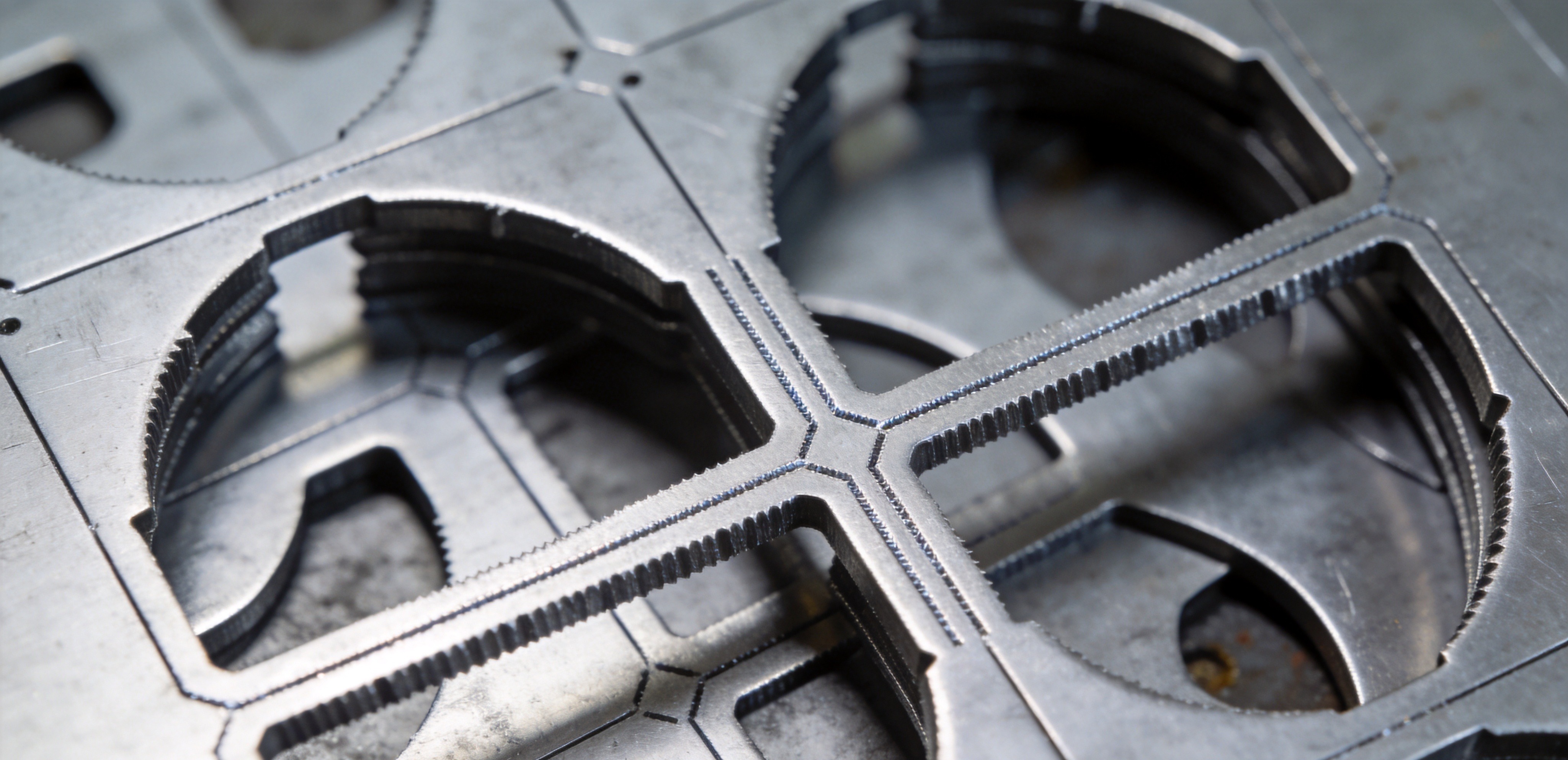
The right machine for you depends heavily on what you’ll be cutting. Here are the most common applications and what to look for in each case.
Sheet Metal Fabrication (Job Shop)
Cutting a variety of materials and thicknesses for different customers:
- Power range: 1500–3000W covers most job shop needs
- Bed size: 1500x3000mm is the most versatile
- Key feature: Quick setup and changeover, good nesting software, auto-focus
- Consider an exchange table to reduce loading/unloading downtime
Stainless Steel and Aluminum
Cutting non-ferrous metals where edge quality is critical:
- Power range: 1000–3000W depending on thickness
- Key feature: Nitrogen cutting capability for oxide-free edges
- Consideration: Higher power doesn’t always help with stainless—beam quality and gas pressure matter more for edge quality
Thick Plate Cutting
Cutting heavy steel plate (12mm+):
- Power range: 3000W minimum; 6000W+ for 25mm+
- Key feature: Stable, rigid machine frame; reliable height sensing; oxygen cutting capability
- Consideration: Cut quality on thick plate depends heavily on beam quality and process parameters, not just power
Tube and Pipe Cutting
Cutting round, square, rectangular, and special profile tubes:
- Power range: 1000–3000W depending on wall thickness and diameter
- Key feature: Rotary chuck capacity (maximum tube diameter and length), chuck clamping accuracy
- Consideration: Dedicated tube machines generally outperform sheet+tube combos for tube work
Precision / Small Parts Cutting
Cutting small, intricate parts with tight tolerances:
- Power range: 500–1500W
- Key feature: High positioning accuracy, fine beam quality, stable motion system
- Consideration: For very fine features, look for machines with high beam quality (low M²)
Safety Features to Look For
Fiber laser cutting machines use Class 4 lasers—the highest hazard class. Safety is non-negotiable.
Essential safety features:
- Full safety enclosure: The cutting area should be fully enclosed with interlocked doors and windows
- Laser safety viewing windows: Windows with appropriate optical density to allow viewing without eye damage
- Emergency stop: Easily accessible E-stop buttons
- Fume extraction system: Laser cutting produces metal fumes that can be hazardous. Proper extraction is essential
- Dust collection: For cutting dry materials that produce fine particulate
- Key switch and authorization: Prevents unauthorized use
- Warning lights and audible signals: Indicates when the laser is active
- Beam path enclosure: The entire beam path from source to head should be enclosed
Regulatory compliance:
- FDA/CDRH compliance (for US markets)
- CE marking (for EU markets)
- IEC 60825 laser safety standard compliance
Total Cost of Ownership
The purchase price is only part of the story. Consider these ongoing costs:
Consumables:
- Protection lenses / windows: The optical component closest to the work surface. Needs periodic cleaning and replacement. Cost: $50–$300 each.
- Nozzles: Cutting nozzles wear out over time, especially with oxygen cutting. $10–$50 each.
- Ceramic rings / holders: Insulate the nozzle from the cutting head. Can crack on collision.
- Assist gas: Ongoing cost that varies significantly by material and thickness. Nitrogen is the most expensive, compressed air the cheapest.
Maintenance:
- Optics cleaning and inspection: Periodic professional maintenance
- Laser source service: Fiber lasers typically have 50,000–100,000 hour lifetimes before needing service
- Cooling system: Water chillers need filter changes and periodic maintenance
- Motion system: Linear guide lubrication, rack and pinion inspection, belt tension checks
Operating costs:
- Electricity: Fiber lasers are relatively energy-efficient, but high-power machines still draw significant current
- Compressed air / assist gas: Major ongoing cost, especially for nitrogen cutting
- Labor: Operator time, programming, and supervision
Warranty and support:
- Look for at least a 2-year warranty on the laser source and 1 year on the machine
- Check what’s covered (parts only vs. parts and labor)
- Evaluate the supplier’s technical support responsiveness
How to Evaluate Suppliers
The quality of the supplier matters as much as the machine itself. Here’s what to look for:
Industry Experience and Track Record
How long has the company been making laser cutting equipment? Do they specialize in cutting, or is it one product among many? Specialized manufacturers often have deeper application knowledge.
Application Support
Can the supplier cut sample parts for you before you buy? A reputable vendor will run sample cuts on your materials and provide test reports with cut quality photos, speed data, and parameter recommendations. This is the best way to verify that a machine will actually handle your applications.
After-Sales Service
- Installation and training: Do they provide on-site setup and operator training?
- Response time: How quickly can they dispatch a technician if something breaks?
- Spare parts availability: Are common replacement parts in stock locally?
- Remote support: Can they diagnose issues remotely to minimize downtime?
Total Solution Approach
Look for suppliers who don’t just sell machines but provide complete solutions—including fume extraction, safety equipment, material handling, software, and process development support.
Transon Laser: A Reliable Choice
When evaluating fiber laser cutting machine suppliers, Transon Laser stands out for several reasons. The company manufactures a full range of fiber laser cutting machines—from 1000W small-format machines to 6000W+ heavy-duty production systems, including flatbed, tube, and combined sheet+tube configurations.
What sets Transon apart is the combination of solid build quality, competitive pricing, and responsive after-sales support. Each machine comes with sample cutting support, so you can verify performance on your specific materials before committing. The company also provides comprehensive training, spare parts supply, and technical assistance—important considerations for a piece of equipment you’ll rely on daily.
For buyers who want a reliable machine backed by a supplier that understands real-world metal fabrication, Transon Laser is well worth including on your shortlist.
Questions to Ask Before Buying
Before making a final decision, ask every supplier these questions:
- Can you cut sample parts for me and show the results? If they won’t do sample testing, that’s a red flag.
- What’s the actual cutting speed for my specific material and thickness? Get a realistic estimate, not just the marketing number.
- What’s included in the price? Machine, laser source, chiller, fume extractor, software, safety gear, training, installation?
- What’s the warranty coverage? How long, what’s covered, is it on-site or return-to-factory?
- What’s the expected lifetime of the laser source? And what does replacement cost?
- Do you have reference customers in my industry? Talk to someone doing similar work.
- What safety certifications does the machine have? CE, FDA, etc.
- Can the machine be upgraded later? Can you add power or features without buying a whole new machine?
Common Mistakes to Avoid
Buying on power alone. A 6000W machine from a no-name brand won’t necessarily outperform a well-built 3000W machine from a reputable manufacturer. Beam quality, motion system quality, reliability, and support matter more than raw wattage.
Ignoring fume and dust extraction. Some buyers budget for the machine but skip the extraction system. This is a serious safety and compliance mistake. Always include proper fume/dust extraction in your budget.
Underestimating floor space requirements. Fiber laser cutters are big machines, and they need clearance around them for loading, unloading, and maintenance. Measure your space carefully before buying.
Not testing on your actual materials. Every material, thickness, and finish cuts differently. What works great on mild steel might struggle with aluminum. Always get sample cutting done.
Forgetting about maintenance costs. Budget for replacement optics, nozzles, filters, and periodic service. These costs add up over the life of the machine.
Choosing the cheapest option. Budget fiber lasers have improved dramatically, but there’s still a quality gap between the cheapest machines and mid-range options. Pay a bit more upfront for better components, better support, and longer life.
Overbuying on power. It’s tempting to go for the highest power you can afford “just in case.” But if you mostly cut 3mm sheet, a 6000W machine will cost more to buy, more to operate, and won’t cut noticeably faster than a 2000W machine on your actual work.
Conclusion
Buying a fiber laser cutting machine is a significant investment, but when chosen correctly, it delivers a strong return through faster production, lower labor costs, reduced material waste, and improved part quality.
The key is to start with your applications—not with a power rating or price point. Identify what materials and thicknesses you’ll be cutting, what production volume you need, and what quality level your customers expect. Then find a machine and a supplier that can deliver those results reliably.
Don’t rush the decision. Get sample cutting done, talk to reference customers, and compare total cost of ownership, not just purchase price. And remember: the cheapest machine often ends up being the most expensive in the long run.
With the right machine and the right supplier, a fiber laser cutter can transform your metal fabrication operation—making it faster, more precise, and more profitable than ever before. Take the time to choose wisely, and you’ll reap the benefits for years to come.
Once you have a sense of which machine type fits your needs, our fiber laser cutting machine parameters guide dives deeper into the technical specifications—power levels, beam quality, motion systems, bed sizes—and how to match them to your actual production requirements.