Introduction
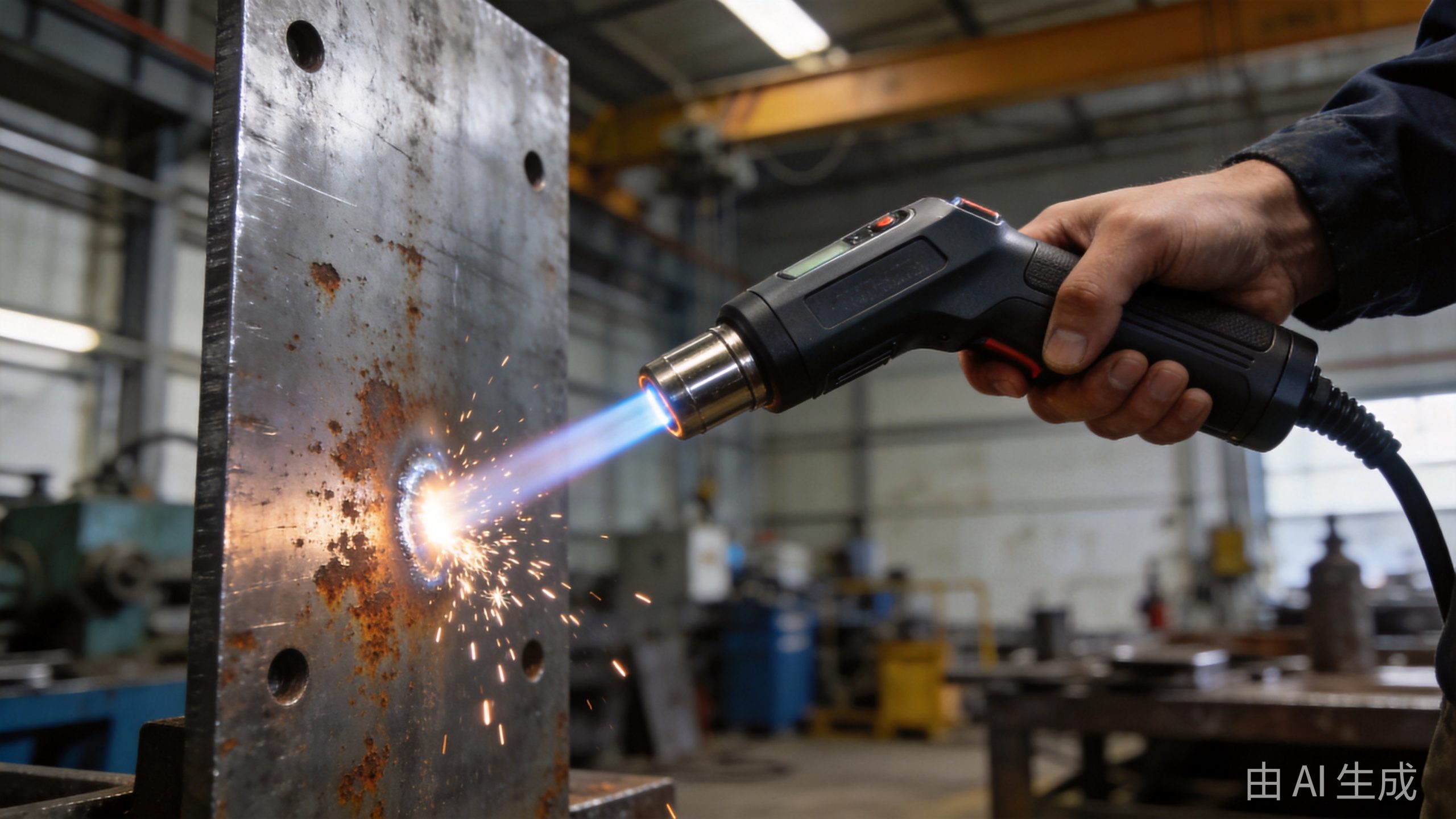
Laser rust removal has emerged as a game-changing technology in industrial cleaning. Unlike traditional methods — sandblasting, chemical stripping, grinding, or hand polishing — laser cleaning removes rust, paint, oil, and contaminants without damaging the base material, without consumables, and without creating hazardous waste.
A laser cleaning machine uses focused fiber laser energy to vaporize or ablate surface contaminants while leaving the underlying substrate intact. The process is non-contact, precise, and environmentally friendly.
In this article, we explore seven key industrial applications where laser cleaning machines are replacing traditional methods, along with the benefits and considerations for each.
1. Rust Removal & Surface Preparation in Metal Fabrication
Rust is the enemy of every metal fabrication shop. Whether you’re working with steel plates, beams, pipes, or sheets, surface oxidation must be removed before welding, painting, or powder coating.
How Laser Cleaning Helps:
- Pre-weld cleaning — removes rust, oil, and mill scale from weld joints for stronger, higher-quality welds
- Pre-paint / pre-coating preparation — creates a clean, profiled surface that improves coating adhesion
- Post-weld cleaning — removes weld discoloration (heat tint) and slag without grinding
- Restoration of rusted parts — removes heavy rust from steel components without material loss
Advantages Over Traditional Methods:
- No abrasive media (no grit, no shot, no disposal cost)
- No chemicals (no hazardous waste, no safety data sheets)
- Precise — clean only the area you need, not the entire part
- Fast — typically 2–5x faster than manual grinding
- Consistent quality — every pass is identical
Typical Power Requirements:
- Light surface rust / oil removal: 100–200W
- Medium rust / mill scale: 500–1000W
- Heavy rust / thick coatings: 1000–2000W
2. Automotive Restoration & Classic Car Repair
Classic car restoration is one of the fastest-growing applications for laser cleaning. Restorers deal with decades of rust, old paint, undercoating, and grease — all on delicate body panels that are easily damaged by aggressive cleaning methods.
Applications in Automotive:
- Rust removal from body panels — removes surface rust without warping thin sheet metal
- Paint stripping — strips old paint layer by layer, allowing selective removal
- Chassis and frame cleaning — removes undercoating, grease, and road grime
- Engine component restoration — cleans cylinder heads, engine blocks, and carburetors
- Wheel and rim restoration — removes brake dust, corrosion, and old paint
Why Laser Beats Sandblasting for Auto Restoration:
- No warping — low heat input means thin panels stay flat
- No media trapped in crevices — sandblasting grit gets everywhere; laser doesn’t
- Selective stripping — remove one paint layer at a time, preserving original markings
- No hazardous waste — fumes can be extracted with a simple filtration system
- Better for delicate parts — trim, emblems, and small parts clean without damage
3. Mold Cleaning in Injection Molding & Die Casting
Mold cleaning is a critical maintenance task in injection molding, die casting, and rubber molding. Release agent buildup, carbon deposits, and residue on mold surfaces directly affect part quality.
Types of Molds Cleaned:
- Injection molds (plastic) — removes release agent buildup, gas residues, and carbon deposits
- Die casting molds — removes aluminum oxide, release agent, and heat-treat scale
- Rubber molds — removes rubber residue and curing byproducts
- Glass molds — removes mold release and surface deposits
- Tire molds — removes rubber buildup from tire mold vents and sidewalls
Benefits for Mold Maintenance:
- No disassembly required — clean molds in-place on the press
- Reduced downtime — clean in minutes vs. hours of manual scrubbing
- No damage to mold surface — preserves polished surfaces and fine details
- No abrasive wear — sandblasting erodes mold texture over time; laser doesn’t
- Longer mold life — gentler cleaning extends mold service life
Return on Investment:
Many mold shops report ROI within 6–12 months based on reduced labor costs, less downtime, and fewer mold replacements due to abrasive cleaning damage.
4. Aerospace & Aviation Maintenance
The aerospace industry has some of the strictest quality and safety standards of any industry. Laser cleaning has been rapidly adopted because it provides precise, controllable, and verifiable surface preparation.
Aerospace Applications:
- Paint stripping from aircraft skins — selective paint removal without damaging the aluminum substrate
- Engine component maintenance — cleans turbine blades, combustion chambers, and exhaust components
- Landing gear overhaul — removes paint, corrosion, and grease
- Composite part repair — cleans carbon fiber surfaces without fiber damage
- Weld inspection preparation — removes coatings to reveal subsurface cracks
Why Aerospace Prefers Laser Cleaning:
- Precise and controllable — adjustable power levels prevent substrate damage
- No chemical residue — critical for parts that will be painted or bonded
- Verifiable process — parameters are recorded and repeatable
- Worker safety — no exposure to harsh chemicals or abrasive dust
- Compliance — meets aerospace quality standards (NADCAP, etc.)
5. Food & Beverage Equipment Cleaning
Food processing equipment requires regular cleaning to maintain hygiene standards and prevent product contamination. Traditional cleaning methods often involve harsh chemicals that can leave residues.
Applications in Food Processing:
- Conveyor belt cleaning — removes food residue, grease, and buildup
- Oven and fryer cleaning — removes carbonized food deposits
- Packaging equipment — cleans glue residues and product buildup
- Stainless steel tank cleaning — removes product residue and mineral deposits
- Dairy equipment — cleans milk stone and protein buildup
Benefits for Food Industry:
- No chemical residue — safer for food contact surfaces
- Dry process — no water runoff, no moisture-related issues
- Precise — clean only the areas that need it
- Fast — reduces cleaning time between production runs
- Environmentally friendly — no chemical waste to dispose of
6. Marine & Shipbuilding
Marine environments are among the harshest for metal structures. Saltwater corrosion, barnacle growth, and paint degradation are constant challenges.
Marine Applications:
- Ship hull cleaning — removes barnacles, algae, and marine growth (drydock applications)
- Rust removal from decks and superstructure — prepares surfaces for repainting
- Propeller and shaft maintenance — removes corrosion and marine growth
- Tank and bilge cleaning — removes rust, oil, and sludge
- Offshore platform maintenance — corrosion control on oil rigs and wind turbine foundations
Advantages in Marine Environments:
- No abrasive waste in water — sandblasting near water creates environmental hazards; laser doesn’t
- Effective on heavy corrosion — high-power lasers handle thick marine rust
- Portable options — handheld models can be used in tight spaces
- Surface profiling — creates the right surface profile for paint adhesion
7. Historical Preservation & Monument Restoration
Laser cleaning has revolutionized the field of historical preservation. For centuries, conservators had limited options for cleaning delicate stone, metal, and wood artifacts — often causing more harm than good.
Preservation Applications:
- Stone monument cleaning — removes soot, graffiti, and biological growth without eroding stone
- Metal artifact restoration — cleans bronze, iron, and copper artifacts safely
- Architectural restoration — cleans historic building facades, statues, and decorative elements
- Paint removal from wood — strips old paint from historic woodwork without damaging the wood
- Archaeological artifact cleaning — gently removes soil and corrosion from excavated objects
Why Laser Is Preferred for Preservation:
- Non-abrasive — no material loss from the original artifact
- Controllable — micron-level precision for delicate work
- Selective — removes only the contaminant layer, preserving patina when desired
- Dry process — no water damage to porous materials
- Documentable — process parameters can be recorded for conservation records
Benefits of Laser Cleaning Across All Industries
Regardless of the specific application, laser cleaning machines offer these universal advantages:
Environmental Benefits
- Zero consumables — no blasting media, no chemicals, no water
- Minimal waste — only the removed contaminant (collected by fume extractor)
- No hazardous waste disposal — no spent chemicals or contaminated media
- Low energy consumption — efficient fiber laser technology
Quality Benefits
- Non-contact — no physical wear on tools or parts
- No substrate damage — laser parameters tuned to remove only the contaminant
- Consistent results — every pass is identical
- Precise — clean exactly the area you want, down to micron level
Economic Benefits
- Lower operating cost — no consumables to buy
- Faster cleaning — typically 2–10x faster than manual methods
- Less labor — one operator can do the work of several
- Reduced downtime — faster cleaning means more production time
Choosing the Right Laser Cleaning Machine
When selecting a laser cleaning machine for your application, consider:
| Factor | Guidance |
|---|---|
| Power Level | Match to your thickest contaminant. 100–200W for light cleaning, 500–1000W for medium duty, 1000–2000W for heavy industrial use. |
| Pulse vs. Continuous | Pulsed lasers are better for delicate surfaces and precision work. Continuous wave (CW) is better for heavy rust and thick coatings. |
| Beam Delivery | Handheld gun for large/complex parts. Galvo scanner for flat surfaces and high speed. Robotic arm for automation. |
| Fume Extraction | Essential for safety and air quality. Make sure the machine includes or is compatible with a fume extraction system. |
| Portability | Do you need to move the machine between workstations? Consider weight and wheeled chassis options. |
Further Reading
Looking for other laser fabrication solutions? Check out our guide on handheld laser welding machines — a complementary technology that many metal fabrication shops add alongside their laser cleaning equipment.
Conclusion
Laser cleaning technology has matured rapidly, and its applications continue to expand across industries. From automotive restoration to aerospace maintenance, mold cleaning to historical preservation, laser rust removal and surface cleaning offer a cleaner, faster, and more precise alternative to traditional methods.
The key to success is matching the right machine — in terms of power, pulse characteristics, and beam delivery — to your specific application. When selected correctly, laser cleaning machines typically deliver ROI within 6–18 months through labor savings, reduced consumable costs, and improved quality.
If you’re considering adding laser cleaning to your operation, start by identifying your primary application and material types, then work with a supplier who can provide sample cleaning on your actual parts.
Want to see how laser cleaning works on your parts? Send us a sample and we’ll demonstrate the results.