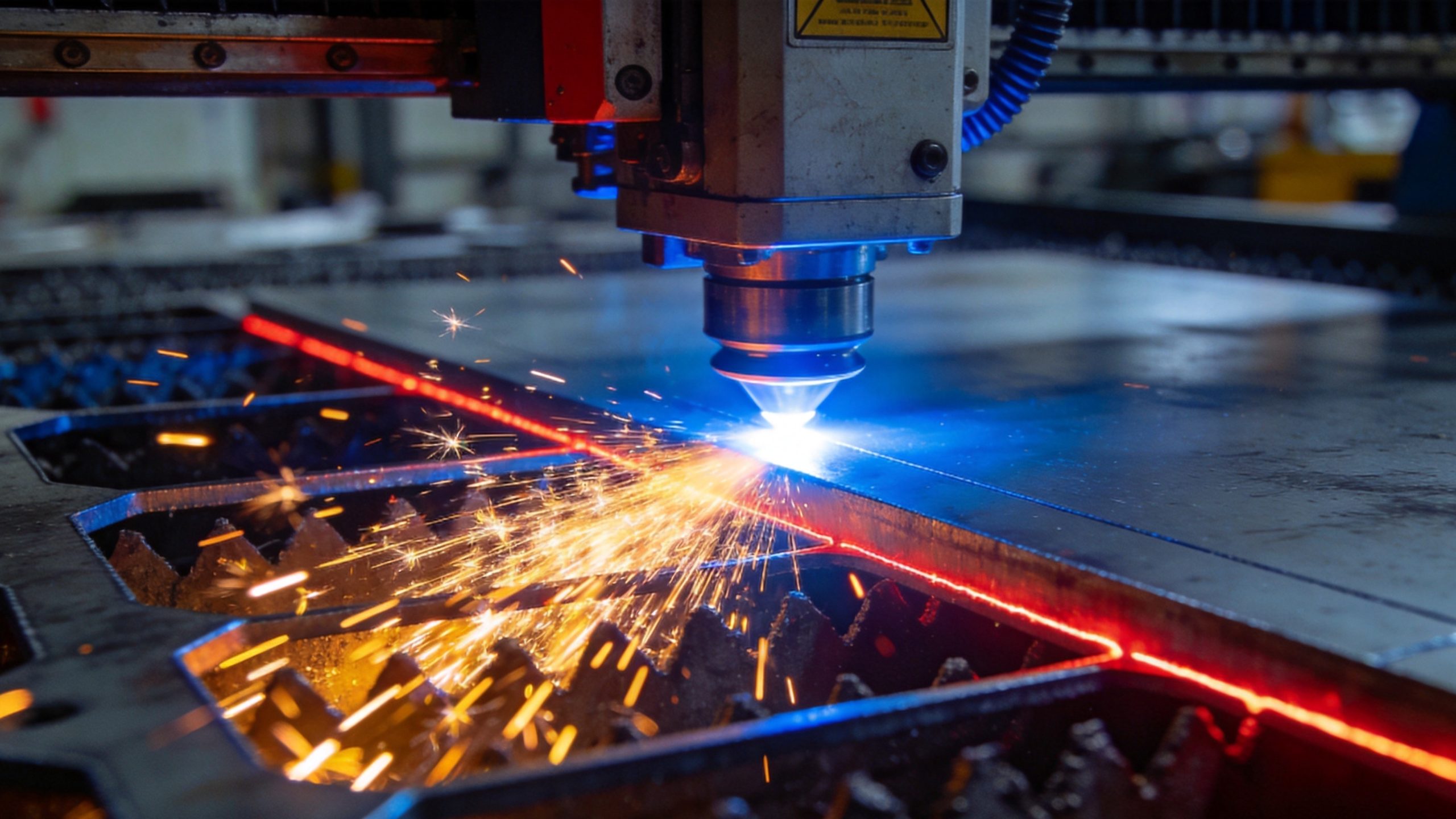
In the sheet metal fabrication industry, cutting is the first and most fundamental operation. For decades, fabricators relied on punch presses, plasma cutters, and CO2 lasers to cut sheet metal parts. But over the past decade, fiber laser cutting has rapidly become the new standard — and for good reason. For more on keeping your machine in top condition, see our Fiber Laser Cutting Machine Maintenance Guide.
Fiber lasers cut faster, more accurately, and at lower cost per part than almost any other sheet metal cutting method. They handle everything from thin sheet to thick plate, from simple shapes to complex geometries, with minimal setup time and maximum consistency. For sheet metal shops looking to stay competitive, a fiber laser cutter is no longer a luxury — it’s a necessity.
In this complete guide, we’ll cover everything you need to know about fiber laser cutting for sheet metal fabrication: how it works, what materials it cuts, real-world speeds and costs, how it compares to other cutting methods, and how to choose the right machine for your shop.
Why Sheet Metal Fabricators Are Switching to Fiber Lasers
The sheet metal industry is competitive. Margins are tight, skilled operators are hard to find, and customers demand faster turnaround, higher quality, and lower prices. Fiber laser cutting addresses all these pain points:
1. Blazing Fast Cutting Speed
A fiber laser cuts thin sheet metal at speeds that punch presses and plasma cutters can’t match. On 1–3mm steel, a 3000W fiber laser can cut at 10–20 meters per minute — dramatically faster than any other method. This directly translates to more parts per hour and higher throughput.
2. Unmatched Precision and Quality
Fiber lasers produce clean, precise cuts with narrow kerf widths (as small as 0.1mm) and excellent edge quality. Parts come off the machine ready for bending or assembly — often with no deburring needed. This is especially important for precision sheet metal work like electronics enclosures and medical equipment.
3. No Tooling Changes
Unlike punch presses that require expensive tooling changes for different part shapes, a fiber laser can cut any shape instantly — just load a new DXF file and press start. This eliminates setup time, makes prototyping fast and cheap, and is perfect for high-mix, low-volume production.
4. Low Operating Cost
No tooling to replace. No consumable electrodes or nozzles (well, very few). Less material waste from narrow kerfs. Lower labor requirements — one operator can run the machine while doing other tasks. The savings add up quickly.
5. Material Versatility
One machine can cut steel, stainless steel, aluminum, copper, brass, and even some non-metals. It can handle thin sheet (0.5mm) and thick plate (20mm+). From delicate brackets to heavy structural parts, a fiber laser does it all.
6. Automation-Friendly
Fiber lasers are easily automated with loading/unloading systems, automatic sorting, and robotic integration. Many shops run their lasers lights-out overnight, dramatically increasing production capacity without adding labor.
How Fiber Laser Cutting Works (Quick Overview)
A fiber laser cutting machine uses a high-power fiber laser beam to melt and vaporize metal, while an assist gas (usually oxygen or nitrogen) blows the molten material away. Here’s the basic process:
- Laser generation: A fiber laser source generates a concentrated beam of infrared light (1064nm wavelength)
- Beam delivery: The laser travels through an optical fiber cable to the cutting head
- Focusing: A lens in the cutting head focuses the laser to a tiny spot on the metal surface
- Melting/vaporizing: The focused laser rapidly heats and melts (or vaporizes) the metal
- Assist gas: Compressed gas (oxygen, nitrogen, or air) blows the molten material through the kerf
- Motion: The cutting head moves along the programmed cutting path, guided by precision motors and linear drives
The key advantage of fiber lasers over CO2 lasers is the shorter wavelength (1064nm vs 10,600nm), which is much better absorbed by metal — especially reflective metals like aluminum, copper, and brass.
For a detailed technical explanation of how fiber laser cutting machines work, see our complete guide to fiber laser cutting technology.
What Can You Cut? Materials and Thicknesses
Fiber laser cutters handle most common sheet metal materials. Here’s what you can expect from different power levels:
Mild Steel / Carbon Steel
Stainless Steel
Aluminum
Copper and Brass
Galvanized Steel
Other Materials
Pro tip from Transon Laser’s technical team: For most sheet metal fabrication shops working primarily with 0.5–6mm steel and stainless steel, a 3000W fiber laser cutter is the sweet spot. It handles 90% of common sheet metal applications at a price point that delivers fast ROI. If you regularly cut 8–12mm material or need maximum speed on thin sheet, step up to 6000W.
Key Cutting Parameters for Sheet Metal
Getting the best cut quality means dialing in the right parameters. Here are the most important settings:
1. Laser Power
2. Cutting Speed
3. Assist Gas Type
4. Gas Pressure
5. Focus Position
6. Nozzle Diameter
Common Sheet Metal Applications
Fiber laser cutting is used across a wide range of sheet metal products and industries:
1. Metal Enclosures and Cabinets
Electrical enclosures, server racks, control cabinets, junction boxes — laser cutting produces precise, burr-free parts that fit together perfectly. The ability to cut any shape without tooling makes custom enclosures fast and affordable.
2. Kitchen Equipment and Stainless Steel Fabrication
Commercial kitchen equipment, food processing machinery, stainless steel countertops, and sinks all benefit from laser cutting’s precision and clean edges. Nitrogen cutting produces oxide-free, sanitary edges that meet food industry standards.
3. HVAC and Ductwork
Sheet metal ductwork, vents, fittings, and HVAC components can be cut quickly and accurately with a fiber laser. The speed and flexibility of laser cutting make it ideal for custom HVAC fabrication.
4. Automotive Sheet Metal Components
Body panels, brackets, exhaust components, chassis parts, and interior trim — automotive suppliers increasingly use fiber lasers for their speed, precision, and consistency. Many automotive plants run automated laser cutting cells 24/7.
5. Metal Furniture
Chairs, tables, shelves, and decorative metal items — laser cutting produces clean, precise parts with smooth edges. The ability to cut intricate patterns and designs opens up creative possibilities for furniture designers.
6. Lighting Fixtures
Metal light fixtures, lamp bases, housings, and reflectors — laser cutting handles the precision and complexity required for lighting components. Reflective materials like aluminum and copper cut well on modern fiber lasers.
7. Signage and Display
Metal signs, display stands, lettering, and point-of-purchase displays — laser cutting lets fabricators produce high-quality custom signage faster than traditional methods. Intricate logos and lettering are no problem.
8. Agricultural Equipment
Metal brackets, panels, guards, and equipment components — laser cutting handles the variety of parts found in agricultural fabrication. Durability and precision are both important for farm equipment.
9. Electronics Enclosures
Aluminum and steel enclosures for electronics, telecom equipment, and control systems — laser cutting produces the tight tolerances and clean edges needed for electronics manufacturing.
Fiber Laser vs. Other Sheet Metal Cutting Methods
Let’s compare fiber laser cutting with the other main sheet metal cutting technologies:
| Factor | Fiber Laser | CO2 Laser | Plasma Cutting | Punch Press | Waterjet |
|---|---|---|---|---|---|
| Speed (thin steel) | Very fast | Fast | Fast | Very fast | Slow |
| Speed (thick steel) | Medium | Medium | Fast | N/A | Very slow |
| Precision | Excellent | Very good | Fair | Good | Excellent |
| Edge quality | Excellent | Very good | Fair | Good | Excellent |
| Material versatility | Excellent | Good | Excellent | Limited | Excellent |
| Complex shapes | Excellent | Excellent | Good | Poor | Excellent |
| Setup time | Very low | Low | Low | High | Low |
| Operating cost | Low | Medium | Low–Medium | Medium | High |
| Equipment cost | Medium–High | Medium | Low | Medium–High | High |
| Thinnest material | 0.1mm | 0.5mm | 1mm+ | 0.5mm | 0.1mm |
| Thickest (steel) | 30mm+ | 25mm+ | 50mm+ | 6mm | 100mm+ |
Fiber Laser vs. CO2 Laser
CO2 lasers were the standard for many years, but fiber lasers have largely replaced them for sheet metal cutting. Fiber lasers are faster on thin-to-medium material, have lower operating costs, require less maintenance, and cut reflective metals better. CO2 lasers still have some advantages on very thick material and non-metal materials, but for sheet metal, fiber is the clear winner.
Fiber Laser vs. Plasma Cutting
Plasma cutting is fast and cheap for thick metal, but it’s less precise, produces rougher edges, and generates more waste. For thin sheet metal and precision parts, fiber laser is far superior. For thick plate (15mm+) where edge quality isn’t critical, plasma can be more economical.
Fiber Laser vs. Punch Press
Punch presses are extremely fast for high-volume production of simple shapes, but they require expensive tooling and can’t cut complex shapes or thick material. Fiber lasers offer much more flexibility and zero tooling cost. For high-mix, low-to-medium volume production, fiber laser wins. For very high volume of simple parts, punch press may still be faster.
Fiber Laser vs. Waterjet
Waterjet cutting is extremely precise and can cut virtually any material, but it’s very slow and expensive. It’s typically used for applications where heat-affected zones can’t be tolerated (like aerospace parts) or for very thick materials. For most sheet metal fabrication, fiber laser is much faster and more economical.
Real-World Productivity Example
Let’s look at a typical sheet metal shop scenario to see the actual productivity gains from switching to fiber laser cutting:
Before: CO2 Laser + Punch Press
Total daily cost: $600
Cost per part: $600 ÷ 50 = $12.00
After: 6kW Fiber Laser
Total daily cost: $320
Cost per part: $320 ÷ 120 = $2.67
Results
This is a simplified example, but it reflects what many sheet metal shops experience when they upgrade to fiber laser cutting. The combination of higher speed, lower labor, and eliminated tooling costs adds up to massive savings.
Choosing the Right Machine for Your Sheet Metal Shop
Questions to Ask Before Buying:
Why Transon Laser for Sheet Metal Fabrication?
Transon Laser’s TSF series fiber laser cutting machines are popular with sheet metal fabricators for several reasons:
- Reliable laser sources: Raycus or Maxphotonics fiber lasers — industry-proven and widely supported
- Multiple power options: 1500W, 2000W, 3000W, 6000W, 8000W, 12000W, and 20000W models available
- Multiple bed sizes: 3015, 4020, 6020, 6025, and custom sizes to fit your material
- Automation options: Automatic loading/unloading systems, rotary devices for tube cutting, and more
- English-speaking support: 24/7 technical support from engineers who speak English
- Competitive pricing: Industrial quality at prices that make ROI calculations straightforward
- Fast delivery: 15–30 days for standard models
If you’re a sheet metal fabricator looking to increase production speed, improve quality, and reduce costs, a fiber laser cutting machine from Transon Laser is one of the best investments you can make.
Tips for Success with Fiber Laser Cutting
1. Start with Proven Parameters
Most machine manufacturers provide parameter libraries for common materials and thicknesses. Start with these baseline settings and fine-tune from there rather than trying to figure everything out from scratch.
2. Keep Consumables in Good Shape
Nozzles, lenses, and protective windows have a big impact on cut quality. Check them daily and replace when they show signs of damage or contamination. A $20 nozzle can ruin $1000 worth of parts if it’s damaged.
3. Optimize Nesting
Good nesting software maximizes material utilization and reduces waste. Modern fiber laser controllers include nesting features, but dedicated nesting software can squeeze out even more efficiency — especially important when cutting expensive materials like stainless steel and aluminum.
4. Use the Right Assist Gas
5. Maintain Your Machine Regularly
A well-maintained laser cutter lasts longer and performs better. Daily tasks include checking nozzles and lenses, cleaning optics, and checking gas levels. Follow the manufacturer’s maintenance schedule for best results.
6. Invest in Training
While fiber lasers are easier to operate than CO2 lasers, proper training ensures your operator gets the best results, minimizes downtime, and doesn’t damage the machine. Most reputable manufacturers (including Transon Laser) include training with purchase.
Related Reading: For a dedicated deep dive on cutting stainless steel — nitrogen vs oxygen gas selection, speed charts by thickness and power, dross troubleshooting, and 304 vs 316 cuttability — see our complete guide to laser cutting stainless steel. Not sure which laser technology is right for you? Read our complete fiber laser vs CO2 laser comparison to help you decide.
Final Thoughts
For sheet metal fabrication, fiber laser cutting is no longer a niche technology — it’s become the industry standard. The speed, precision, flexibility, and cost advantages are simply too large to ignore for shops that want to stay competitive.
If you’re still relying on CO2 lasers, punch presses, or plasma cutters for your sheet metal work, the question isn’t whether you should switch to fiber laser — it’s when. And with machine prices continuing to come down while performance keeps going up, the barrier to entry has never been lower.
The key is choosing the right power level and configuration for your specific needs. A 3000W machine is perfect for most general sheet metal work, while 6000W or 12000W machines are better for thicker material or higher production volumes.
Further Reading: