Introduction
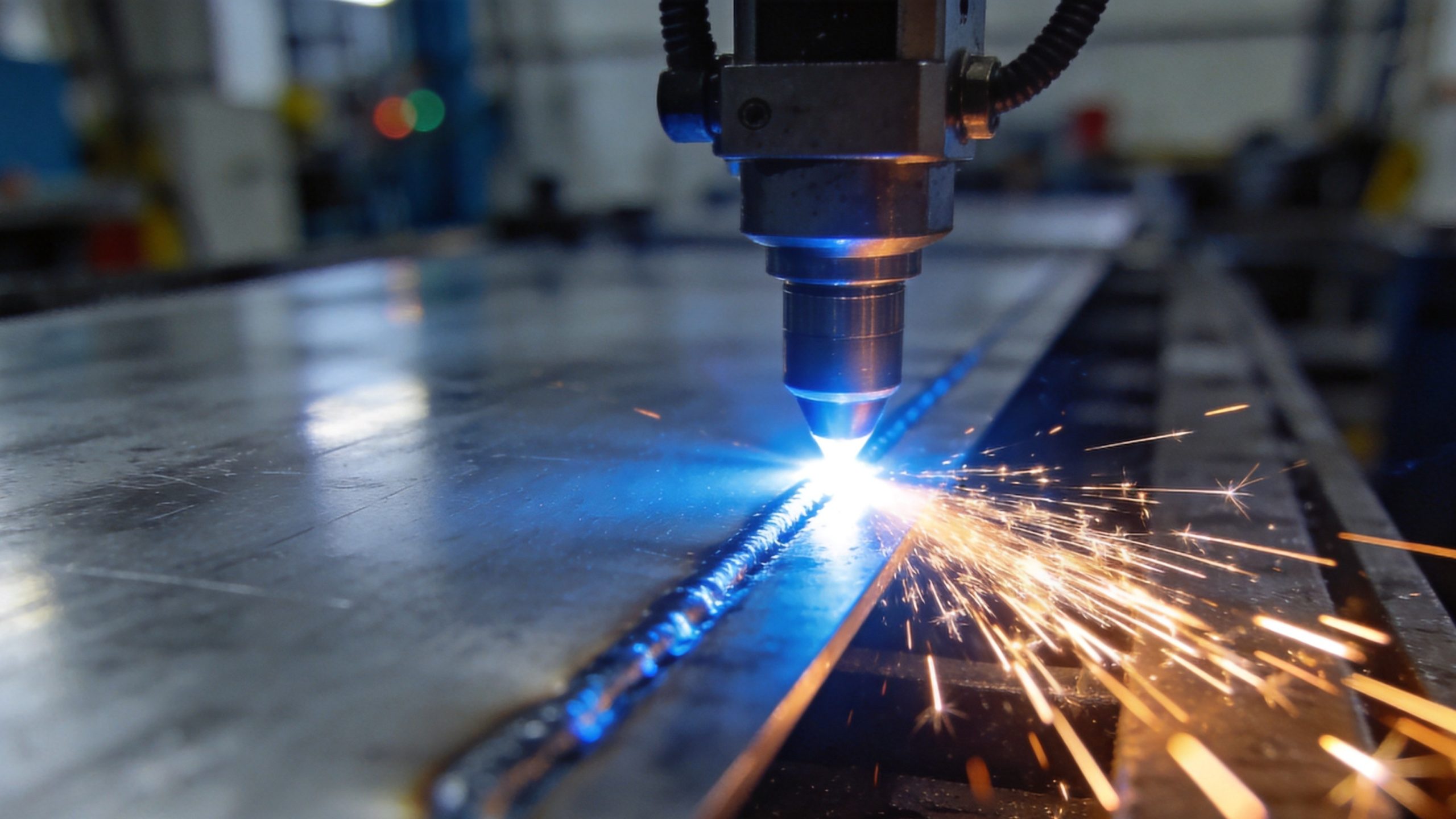
Stainless steel is one of the most widely used materials in modern manufacturing — from food processing equipment and medical devices to automotive exhaust systems and architectural structures. Its corrosion resistance, strength, and clean aesthetic make it indispensable, but welding it correctly is where many fabricators run into trouble.
Traditional welding methods like TIG (GTAW) and MIG (GMAW) have long been the go-to for stainless steel, but they come with trade-offs: slow travel speeds, high heat input that distorts thin sheets, and a steep learning curve for consistent quality. Enter laser welding — a high-precision, low-heat-input process that is rapidly becoming the preferred method for stainless steel fabrication.
In this guide, we’ll walk through everything you need to know about laser welding stainless steel: how it works, why it’s different from other methods, which parameters matter most, common defects and how to avoid them, and how to choose the right laser welding machine for your application.
Why Laser Welding for Stainless Steel?
Stainless steel — particularly austenitic grades like 304 and 316 — has some unique properties that make it both ideal and challenging to weld:
- High thermal conductivity (lower than carbon steel but still significant) means heat spreads quickly from the weld zone
- High coefficient of thermal expansion leads to distortion and warping, especially on thin sheets
- Sensitivity to heat input — too much heat can cause grain growth, loss of corrosion resistance, or sensitization
- Need for clean, porosity-free welds in many industries (food, medical, aerospace)
Laser welding addresses all of these challenges with several key advantages:
1. Low Heat Input, Minimal Distortion
The focused laser beam delivers energy in a tiny spot (typically 0.1–0.5 mm), concentrating heat exactly where it’s needed. The heat-affected zone (HAZ) is dramatically smaller than with TIG or MIG welding, which means:
- Less warping and distortion on thin sheets (even 0.5 mm and below)
- Less post-weld straightening or machining
- Better dimensional accuracy on finished parts
For thin-gauge stainless steel components — think kitchen equipment, medical instruments, or electronic enclosures — this is a game-changer. Parts come off the welding table nearly ready for finishing, with minimal rework.
2. High Welding Speed
Laser welding is significantly faster than conventional methods:
| Welding Method | Typical Speed (1mm sheet) |
|---|---|
| TIG (GTAW) | 10–30 cm/min |
| MIG (GMAW) | 30–80 cm/min |
| Laser Welding | 100–500 cm/min |
That’s 3–10x faster than TIG welding for the same material thickness. For high-volume production, the throughput gains are enormous.
3. Deep and Narrow Weld Profile
Laser welding produces a deep, narrow weld bead thanks to the keyhole effect — the laser vaporizes metal to create a capillary (keyhole) that absorbs energy deep into the material. This is especially valuable for:
- Thick stainless steel sections that would otherwise require multiple passes
- Joints where access is limited to one side
- Applications needing full penetration with minimal weld volume
4. Clean, Aesthetic Welds
For stainless steel products where the weld is visible — think restaurant equipment, handrails, or decorative components — laser welds are smooth, uniform, and require minimal polishing or grinding. The narrow bead and consistent penetration give a clean, professional look right out of the process.
5. Automation-Friendly
Laser welding systems integrate easily with robotic arms, CNC tables, and automated production lines. Once parameters are dialed in, the process is highly repeatable — part after part, shift after shift, with consistent quality.
How Laser Welding Works on Stainless Steel
Laser welding uses a highly focused beam of coherent light to melt and fuse metal. When the beam hits the stainless steel surface, two things happen:
- Conduction mode — at lower power densities, energy is absorbed at the surface and conducted inward, producing a wide, shallow weld pool
- Keyhole mode — at higher power densities (above ~10⁶ W/cm²), the metal vaporizes, creating a vapor-filled cavity (keyhole) that traps laser energy and enables deep, narrow penetration
Most industrial laser welding of stainless steel operates in keyhole mode for maximum efficiency and penetration.
The Role of Shielding Gas
Even though laser welding is a non-contact process, shielding gas is still essential for stainless steel. Its purposes include:
- Preventing oxidation of the molten weld pool and hot HAZ
- Suppressing plasma that can form above the weld and absorb laser energy
- Protecting optics from spatter and metal vapor
Common shielding gases for stainless steel laser welding:
| Gas | Application | Notes |
|---|---|---|
| Argon (Ar) | General purpose | Good protection, moderate cost, widely used |
| Helium (He) | High-power, deep penetration | Higher ionization potential reduces plasma, more expensive |
| Ar + He mix | Balanced performance | Combines cost efficiency with plasma control |
| Ar + N₂ | Some stainless applications | Can improve speed but may affect corrosion resistance |
Pro tip: For austenitic stainless steel (304, 316), pure argon or an argon-helium mix is the most common choice. The gas flow rate typically ranges from 10–25 L/min, delivered through a coaxial nozzle or side jet.
Key Parameters for Laser Welding Stainless Steel
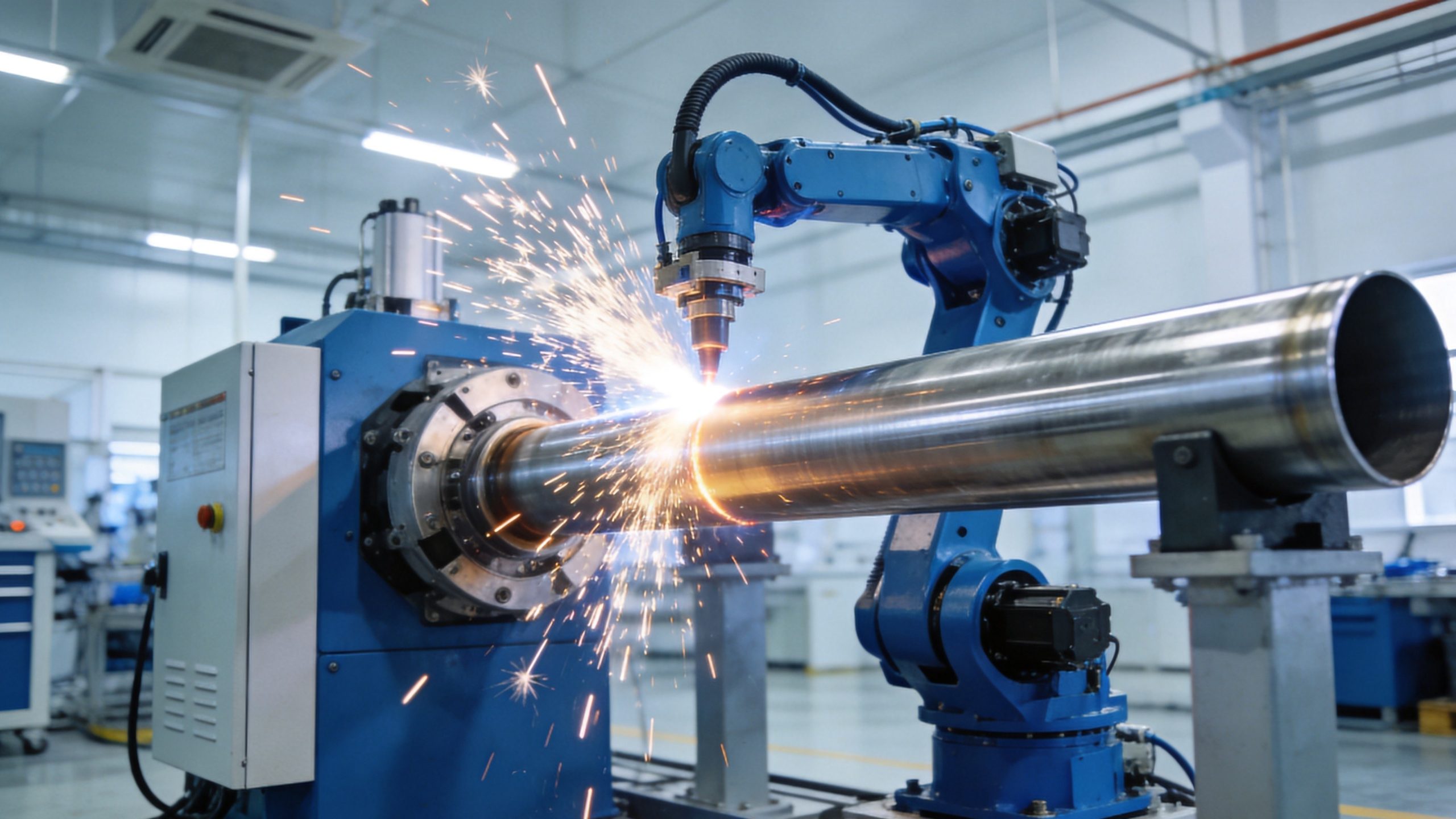
Getting good results with laser welding means understanding and controlling the key parameters. Here are the most important ones, in order of impact:
1. Laser Power
Laser power is the primary driver of penetration depth. For stainless steel:
- Thin sheet (0.3–1.0 mm): 500–1500 W
- Medium sheet (1.0–3.0 mm): 1500–3000 W
- Thick plate (3.0–8.0 mm): 3000–6000 W
These are rough guidelines — actual power requirements depend on welding speed, joint design, and whether you need full or partial penetration.
2. Welding Speed
Speed and power work together. Higher speed means less energy per unit length, reducing penetration. The relationship is roughly:
> Penetration depth ∝ Power / Speed
If you double the speed while keeping power constant, penetration decreases significantly. Finding the right balance is critical for consistent results.
3. Focus Position (Defocus)
Where the laser focal point sits relative to the workpiece surface has a major effect on weld shape and penetration:
- Focus on surface (0 defocus): maximum power density, deepest penetration, narrowest weld
- Slightly defocused (+0.5 to +1.5 mm above surface): wider weld pool, more stable keyhole, better gap bridging
- Negative defocus (below surface): used for some thick-material applications
For most stainless steel sheet welding, a slightly positive defocus (0.5–1.0 mm above the surface) gives the best combination of penetration and stability.
4. Beam Mode (Spot Size)
Fiber lasers can be configured with different spot sizes and beam qualities:
- Single-mode (SM) fiber lasers: very small spot (0.05–0.15 mm), high power density, ideal for thin material and fine welding
- Multi-mode (MM) fiber lasers: larger spot (0.2–0.6 mm), more forgiving of joint gaps, better for thicker material
For general stainless steel fabrication, a 1500–3000 W multi-mode fiber laser is the most versatile choice.
5. Pulse vs. Continuous Wave (CW)
- Continuous wave (CW): steady beam, high throughput, best for linear welds and production
- Pulsed: controlled energy per pulse, better for heat-sensitive materials, spot welding, or delicate assemblies
Most industrial stainless steel welding uses CW fiber lasers for speed and efficiency. Pulsed lasers are more common in precision applications like medical device manufacturing or jewelry.
Common Stainless Steel Grades and Weldability
Not all stainless steels weld the same way. Here’s how the major families compare:
Austenitic Stainless Steels (304, 316, 321)
The most commonly welded stainless steels, and generally the easiest:
- 304 / 304L: the workhorse grade — excellent weldability with all methods
- 316 / 316L: molybdenum-alloyed for better corrosion resistance — welds similarly to 304
- 321: titanium-stabilized to prevent sensitization — good for high-temperature service
Laser welding considerations:
- Very good weldability in keyhole mode
- Low carbon grades (304L, 316L) preferred to avoid sensitization (carbide precipitation at grain boundaries)
- Shielding gas purity is important for maintaining corrosion resistance
- Filler metal may not be needed for autogenous welds on thinner material
Ferritic Stainless Steels (430, 409)
Lower cost, magnetic, used in automotive exhaust and appliances:
- 430: common ferritic grade, moderate corrosion resistance
- 409: titanium-stabilized, used for exhaust systems
Laser welding considerations:
- Can suffer from grain growth in the HAZ, reducing toughness
- Low heat input of laser welding is actually an advantage here (smaller HAZ)
- Preheating may be needed for thicker sections to prevent cracking
Duplex Stainless Steels (2205, 2507)
High strength and excellent corrosion resistance, used in chemical processing and offshore:
Laser welding considerations:
- Requires careful control of heat input to maintain the austenite-ferrite balance
- Too fast cooling = too much ferrite = lower toughness and corrosion resistance
- May need post-weld heat treatment or filler wire with austenite-promoting elements (Ni, N)
- Laser’s rapid cooling can be a challenge — slower speeds and preheating may help
Martensitic Stainless Steels (410, 420)
Hardenable, used for cutlery, tools, and wear parts:
Laser welding considerations:
- High hardenability means welds can crack if cooled too quickly
- Preheating (200–300°C) and post-heating are usually required
- Filler wire matching the base material or a more ductile grade may be needed
- Laser’s low heat input can help reduce HAZ hardness compared to conventional methods
Joint Design for Laser Welding Stainless Steel
Laser welding has specific joint design requirements because the beam is so narrow. The gap between parts must be small and consistent.
Recommended Joint Configurations
| Joint Type | Suitability | Maximum Gap | Notes |
|---|---|---|---|
| Butt joint | Excellent | < 10% of thickness | Most common, full penetration achievable |
| Lap joint | Good | < 20% of top sheet | Clamping pressure important for good contact |
| Fillet joint | Moderate | — | More challenging with laser, may need wobble |
| T-joint | Moderate | — | Access from one side, may need angled beam |
| Edge joint | Good | — | Simple, good for sheet edges |
Gap Bridging
One limitation of laser welding is its sensitivity to joint gaps. The narrow beam can fall into a gap without melting both sides. Solutions include:
- Wobble welding — oscillating the laser beam in a circular or figure-8 pattern to widen the effective weld area
- Filler wire — adding wire to fill gaps and bridge mismatches
- Better fixturing — precision clamping and tooling to minimize gaps
- Defocused beam — slightly defocusing to widen the spot (at the cost of some penetration)
For production environments, investing in good fixturing usually pays for itself in reduced scrap and faster welding speeds.
Common Defects and How to Avoid Them
Even with the right equipment, laser welding stainless steel can produce defects if parameters aren’t optimized. Here are the most common issues:
1. Porosity
What it looks like: Small voids or bubbles inside the weld bead.
Causes:
- Contamination on the material surface (oil, grease, oxide layer)
- Insufficient or incorrect shielding gas
- Keyhole instability at high speeds
- Moisture or hydrogen in the material or filler wire
Solutions:
- Clean material thoroughly before welding (acetone or isopropyl alcohol wipe)
- Verify shielding gas flow and nozzle alignment
- Slightly reduce speed or increase power for more stable keyhole
- Use high-purity shielding gas (99.99% argon or better)
2. Cracking (Hot Cracking)
What it looks like: Cracks along the centerline of the weld or in the HAZ.
Causes:
- High restraint in the joint design
- Improper filler metal selection
- Too-high cooling rates
- Material with high sulfur or phosphorus content
Solutions:
- Use low-carbon grades (304L, 316L) for better crack resistance
- Add filler wire with appropriate composition (e.g., 308L, 316L)
- Reduce travel speed slightly to slow cooling
- Consider preheating for thicker or high-restraint joints
- Use a more ductile filler material
3. Lack of Penetration / Incomplete Fusion
What it looks like: Weld doesn’t go all the way through, or the two pieces aren’t fully fused.
Causes:
- Insufficient laser power for the material thickness
- Welding speed too high
- Focus position incorrect
- Joint gap too large
Solutions:
- Increase power or decrease speed
- Verify focus position and recalibrate if needed
- Improve fixturing to reduce joint gap
- Consider multiple passes for very thick material
4. Spatter
What it looks like: Small metal droplets ejected from the weld pool, sticking to the surrounding surface.
Causes:
- Excessive power density
- Keyhole instability
- Incorrect gas flow
- Contaminated material
Solutions:
- Slightly reduce power or increase speed
- Adjust defocus to widen the spot
- Optimize shielding gas flow rate and direction
- Clean material before welding
- Apply anti-spatter spray (for cosmetic parts)
5. Undercut
What it looks like: A groove or depression along the weld toe where base metal has been melted away.
Causes:
- Too-high travel speed
- Excessive power
- Incorrect beam alignment
- Insufficient filler material
Solutions:
- Reduce speed slightly
- Lower power or increase defocus
- Add filler wire to build up the weld toe
- Verify beam is centered on the joint
Wobble Laser Welding: A Game-Changer for Stainless Steel
In recent years, wobble laser welding (also called beam oscillation welding) has become increasingly popular for stainless steel fabrication. By rapidly oscillating the laser beam in a controlled pattern (circle, figure-8, or linear), the effective weld width increases dramatically while maintaining the deep penetration of keyhole welding.
Benefits of Wobble Welding for Stainless Steel:
- Better gap bridging — wider weld pool tolerates larger joint gaps (up to 0.5–1.0 mm instead of 0.1–0.2 mm)
- More stable process — wider keyhole reduces porosity and spatter
- Improved weld quality — better mixing of the weld pool, more uniform microstructure
- Reduced fixturing cost — looser tolerances mean less expensive tooling
- Fillet welding capability — can produce proper fillet welds that are difficult with a fixed beam
When to Use Wobble vs. Fixed Beam:
| Application | Best Choice |
|---|---|
| Thin sheet, precision welding | Fixed beam (single-mode) |
| Production with tight tolerances | Fixed beam |
| General fabrication with variable gaps | Wobble |
| Fillet welds and T-joints | Wobble |
| Dissimilar metal welding | Wobble |
| Thick material, deep penetration | Fixed beam + wobble combo |
Many modern laser welding machines — including handheld models — come with wobble capability built in, making it easy to switch between modes for different jobs.
Handheld Laser Welding vs. Robotic / CNC
When it comes to laser welding stainless steel, you have two main equipment categories:
Handheld Laser Welding Machines
Portable, operator-guided laser welders that look similar to a TIG torch but deliver laser energy through a fiber optic cable.
Pros:
- Flexible — can weld complex shapes and large assemblies that don’t fit in a CNC machine
- Fast setup — no programming needed, just point and weld
- Lower initial investment than robotic systems
- Easy to learn — most operators are productive within a few hours of training
- Wobble capability built into most models
Cons:
- Consistency depends on operator skill
- Not ideal for very high-volume production
- Safety considerations (laser safety glasses, proper ventilation)
- Thickness limited by machine power (typically up to 4–6 mm with 3000W)
Best for: Job shops, custom fabrication, repair work, medium-volume production, stainless steel furniture, kitchen equipment, signage.
Robotic / CNC Laser Welding
Automated systems where the laser head is mounted on a robotic arm or gantry, following a programmed path.
Pros:
- Extremely consistent — identical welds every time
- High throughput — runs 24/7 with minimal supervision
- Can integrate with other processes (cutting, bending, assembly)
- Better for complex 3D weld paths
- Higher power options available (up to 10,000W+)
Cons:
- Higher upfront cost
- Requires programming expertise
- Less flexible for one-off or custom jobs
- Larger footprint
Best for: High-volume manufacturing, automotive, aerospace, medical devices, and any application where consistency and throughput are paramount.
Which Is Right for You?
For most stainless steel fabricators, a 1500W or 2000W handheld laser welding machine with wobble is the most versatile starting point. It handles the majority of sheet metal and tube welding applications, provides excellent ROI through speed and quality gains, and is easy to integrate into existing workflows.
If you’re running high-volume production with consistent part geometry, a robotic system will deliver better long-term value.
Choosing the Right Laser Welding Machine for Stainless Steel
With so many options on the market, choosing the right machine can be overwhelming. Here are the key factors to consider:
1. Power Level
Match the power to your thickest typical material:
| Material Thickness | Recommended Power |
|---|---|
| 0.3–1.5 mm | 1000–1500 W |
| 1.0–3.0 mm | 1500–2000 W |
| 2.0–5.0 mm | 2000–3000 W |
| 4.0–8.0 mm | 3000–6000 W |
Recommendation: Buy slightly more power than you think you need. A 2000W machine can weld thin material just fine (by reducing power), but a 1000W machine can’t magically weld 3mm stainless steel.
2. Fiber Laser Source Quality
The laser source is the heart of the machine. Top brands include:
- IPG Photonics (US) — industry standard, excellent reliability
- Raycus (China) — good quality, competitive pricing
- Max Photonics (China) — strong value, widely used in handheld welders
- nLIGHT (US) — high-performance, adjustable beam quality
For production use, invest in a reputable source. The savings from a cheap source disappear quickly if it fails and your line goes down.
3. Wobble Capability
Look for a machine with built-in wobble (beam oscillation) with adjustable:
- Pattern (circle, figure-8, linear)
- Amplitude (0–5 mm typical)
- Frequency (0–500 Hz typical)
This feature alone will expand the range of jobs you can take on.
4. Wire Feeder
A built-in wire feeder adds versatility:
- Bridges larger gaps
- Enables filler metal addition for better metallurgy
- Useful for dissimilar metal welding
- Helps build up weld beads for fillet joints
Most quality handheld welders offer an optional or integrated wire feeder.
5. Cooling System
Laser welders generate a lot of heat. Make sure the machine has a reliable industrial water chiller with:
- Sufficient cooling capacity for the laser power
- Temperature stability of ±0.5°C or better
- Filter system to keep coolant clean
- Alarm functions for low water level, high temperature
6. Safety Features
Laser welding uses Class 4 lasers — safety is non-negotiable. Look for:
- Interlock systems
- Laser safety glasses included
- Fume extraction recommendations or integration
- Emergency stop buttons
- Clear safety enclosures (for automated systems)
7. After-Sales Support
This is where the choice of supplier really matters. Consider:
- Do they provide installation and training?
- What’s the warranty on the laser source?
- How quickly can they dispatch a service technician?
- Do they stock spare parts locally?
- Is there phone or video support for troubleshooting?
For fabricators, downtime costs money. A machine with great support is worth paying a bit more for.
Transon Laser offers a range of handheld and robotic laser welding machines specifically optimized for stainless steel fabrication, with global service support and competitive pricing. Our TS-W series welders come standard with wobble capability, wire feeder compatibility, and Raycus or IPG laser source options.
Best Practices for Laser Welding Stainless Steel
Follow these guidelines to get the best results:
Before Welding
- Material preparation — Clean all surfaces with acetone or isopropyl alcohol to remove oil, grease, and contaminants. Even fingerprint oil can cause porosity.
- Joint fit-up — Ensure consistent gap and alignment. Use clamps, magnets, or tack welds to hold parts securely.
- Shielding gas setup — Check gas pressure, flow rate, and nozzle condition. Use high-purity argon (99.99% minimum) for critical applications.
- Safety check — Put on laser safety glasses, ensure proper ventilation, and clear the area of flammable materials.
- Test weld — Always run a test on scrap material of the same thickness and grade to dial in parameters before welding production parts.
During Welding
- Maintain consistent travel speed — Uneven speed causes uneven penetration. Practice smooth, steady movement.
- Keep the correct angle — For handheld welding, a 10–15° push or drag angle works well. Avoid excessive angles that can disperse the beam.
- Watch the weld pool — A stable keyhole produces a consistent, bright weld pool. If you see excessive spatter or an unstable pool, adjust parameters.
- Use proper gas coverage — Ensure the shielding gas covers the entire weld zone, including the trailing edge where the metal is still hot and vulnerable to oxidation.
- Monitor heat buildup — On long welds, heat can build up in the part, changing penetration. You may need to adjust speed or use intermittent welding.
After Welding
- Inspect visually — Check for porosity, cracks, undercut, or incomplete fusion.
- Clean the weld — Remove any discoloration or oxide layer with a wire brush, pickling paste, or electropolishing for critical applications.
- Test when required — Pressure testing, dye penetrant inspection, or destructive testing may be needed for safety-critical parts.
- Document parameters — Record successful settings for each material and thickness to build your own parameter library.
Post-Weld Finishing of Stainless Steel Laser Welds
One of the great advantages of laser welding stainless steel is that welds often need minimal finishing. However, for cosmetic or corrosion-critical applications, you may still need to:
Common Finishing Methods:
- Wire brushing — Quick removal of surface oxides. Use stainless steel brushes only (never carbon steel brushes, which can contaminate the surface).
- Pickling / passivation — Chemical treatment to remove heat tint and restore the chromium oxide layer for maximum corrosion resistance. Pickling paste is applied locally, then rinsed off.
- Grinding and polishing — For cosmetic welds on visible surfaces. Start with a flap disc, move to finer abrasives, and finish with a polishing compound for a mirror shine.
- Electropolishing — Electrochemical process that smooths and passivates the surface in one step. Produces excellent corrosion resistance and a clean, bright finish.
- Bead blasting — Creates a uniform matte finish. Use glass bead or stainless steel shot media.
Important: Any finishing operation that removes material from the weld surface will reduce effective weld size. Make sure your weld has enough reinforcement to account for material removal during finishing.
Cost Comparison: Laser Welding vs. Traditional Methods
Is laser welding worth the investment? Let’s look at the economics:
Upfront Cost
| Method | Typical Equipment Cost |
|---|---|
| TIG welder | $1,000–$5,000 |
| MIG welder | $2,000–$10,000 |
| Handheld laser welder (1500W) | $5,000–$15,000 |
| Robotic laser welding cell | $50,000–$200,000+ |
Laser equipment costs more upfront, but the operational savings are significant.
Operating Cost Comparison
| Factor | TIG | MIG | Laser |
|---|---|---|---|
| Labor cost (per hour) | High (skilled welder) | Medium | Low (easy to learn) |
| Welding speed | Slow | Medium | Fast (3–10x TIG) |
| Post-weld rework | High (grinding, straightening) | Medium | Low (minimal distortion) |
| Consumables | Tungsten, gas, filler | Wire, gas, tips | Gas, occasional optics |
| Energy cost | Medium | Medium | Higher (but offset by speed) |
ROI Calculation Example
For a job shop welding 1mm stainless steel:
- TIG welder: 20 cm/min, $25/hr labor, $0.50/hr consumables
- Laser welder: 200 cm/min, $15/hr labor, $1.50/hr consumables
Per meter of weld:
- TIG: 5 minutes of labor = ~$2.08 labor + $0.04 consumables = $2.12/m
- Laser: 0.5 minutes of labor = ~$0.13 labor + $0.01 consumables = $0.14/m
That’s roughly 15x lower cost per meter — and that’s before accounting for reduced post-weld rework and distortion correction.
For a shop that does even a few hours of stainless steel welding per day, a handheld laser welder typically pays for itself in 3–12 months.
Frequently Asked Questions
Can you laser weld all types of stainless steel?
Yes, all major types — austenitic (304, 316), ferritic (430), duplex (2205), and martensitic (410) — can be laser welded. However, each type has different considerations: austenitic grades are the easiest, while martensitic and duplex grades require more careful parameter control and may need preheating or filler wire.
How thick can you laser weld stainless steel?
With a 1500W machine: up to about 2–3mm (full penetration). With 3000W: up to 4–6mm. With 6000W+: up to 8–10mm. Very thick sections may require multiple passes or beveled joints.
Do you need filler wire for laser welding stainless steel?
Not always. For thin material with good fit-up, autogenous (no filler) laser welding works great and produces clean, narrow welds. Filler wire is needed when:
- Joint gaps are too large
- You need to add alloying elements for better metallurgy
- Welding dissimilar metals
- Building up fillet welds
- Preventing hot cracking in certain grades
Is laser welding stronger than TIG welding?
When properly executed, laser welds can have equal or better mechanical properties than TIG welds. The smaller HAZ and faster cooling can produce a finer grain structure. However, the specific strength depends on many factors including material, filler metal, and post-weld treatment. For most stainless steel applications, laser welds meet or exceed industry standards.
Can you weld stainless steel to other metals with a laser?
Yes. Laser welding is excellent for dissimilar metal welding because of the low heat input and precise control. Common combinations include stainless steel to carbon steel, stainless steel to aluminum (with challenges), and stainless steel to copper. Some combinations require filler wire or special techniques to manage intermetallic formation.
How safe is laser welding?
Laser welding uses Class 4 lasers, which can cause eye and skin damage. However, with proper safety equipment (laser safety glasses with the correct wavelength rating), proper ventilation, and operator training, it is a safe process. Handheld laser welders are designed with safety interlocks and require the operator to press both a trigger and a safety switch to fire. For more on keeping your laser welding equipment in top condition, check out our complete fiber laser welding machine maintenance guide. Learn more about how this technology is transforming the auto industry in our complete guide to laser welding in automotive manufacturing.
Conclusion
Laser welding has transformed stainless steel fabrication. What once required skilled TIG welders, slow travel speeds, and significant post-weld rework can now be done faster, cleaner, and with better quality than ever before.
The key takeaways:
- Laser welding excels at stainless steel because of its low heat input, minimal distortion, high speed, and clean weld appearance
- Parameters matter — power, speed, focus position, and shielding gas all affect weld quality
- Wobble capability dramatically improves gap tolerance and weld stability, making it a must-have feature for most fabricators
- Handheld laser welders offer an accessible entry point with fast ROI for job shops and custom fabricators
- Proper preparation and parameter testing are essential for consistent, high-quality results
Whether you’re a small job shop looking to speed up stainless steel welding or a large manufacturer automating a production line, laser welding delivers measurable improvements in quality, speed, and cost.
If you’re considering adding laser welding to your capabilities, Transon Laser offers a range of handheld and automated laser welding systems optimized for stainless steel. Our TS-W series combines reliable laser sources, intuitive controls, and wobble technology to help you get the best results from day one.
Stainless steel is one of the most widely used materials in implantable devices, and the welding fundamentals discussed in our laser technology in medical device manufacturing apply directly to hermetic medical applications.
Stainless steel laser welding fundamentals covered here extend to many aerospace applications, where the material is used in structural and system components—our laser technology in aerospace manufacturing explores these higher-precision use cases in depth.
For a full technical breakdown of machine specifications and how to choose the right configuration for your stainless steel welding work, see our laser welding machine parameters guide.